
On April 1,2026, Drift Protocol, a cornerstone decentralized exchange on Solana, fell victim to a meticulously orchestrated Drift Protocol exploit that siphoned away approximately $285 million in assets. This incident, the largest DeFi breach of the year and second only to Wormhole in Solana's storied history of exploits, wasn't born from a smart contract vulnerability or private key compromise. Instead, it exposed the fragility of human elements in blockchain security: multisig social engineering combined with operational lapses in pre-signed transaction handling.
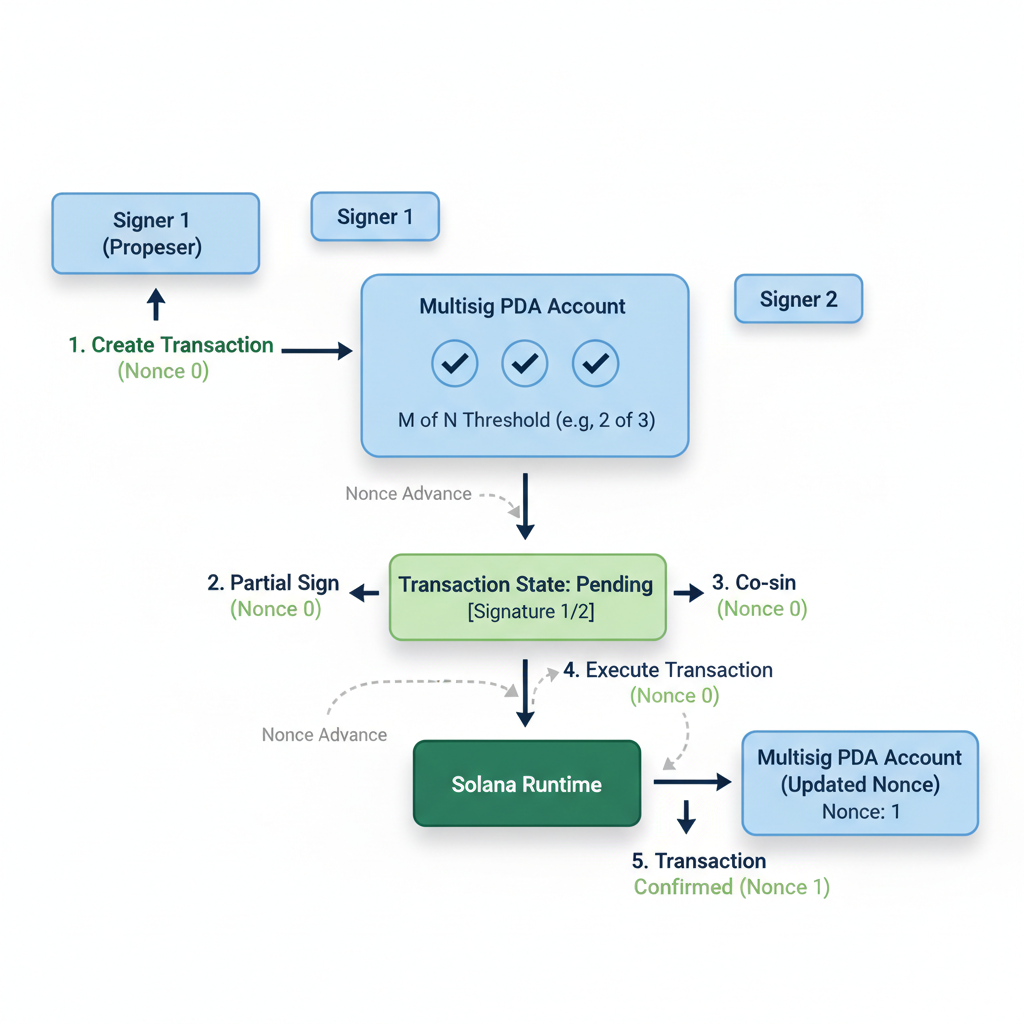
The attacker, suspected to be linked to DPRK actors based on on-chain patterns, spent weeks laying groundwork. They duped two out of five multisig signers into approving malicious transactions via Solana's durable nonce mechanism. This feature, designed for reliable transaction submission, became a Trojan horse, granting administrative control over Drift's vaults. In a blistering 12-minute window, funds were drained, laundered through fake collateral tokens, converted to USDC, and bridged to Ethereum. Drift swiftly halted deposits and withdrawals, partnering with security firms and exchanges to claw back assets, but the damage rippled across Solana DeFi.
The Anatomy of the Multisig Social Engineering Assault
Multisig wallets promise robust security through distributed control, requiring consensus among signers for critical actions. Yet, Drift's setup revealed a classic pitfall: over-reliance on trusted parties without ironclad verification protocols. The perpetrators posed as legitimate actors, likely through phishing or impersonation, convincing signers to pre-approve transactions under the guise of routine maintenance.
Solana's durable nonce allowed these pre-signatures to persist, executable at the attacker's whim. Once two signers bit, the threshold was met. Vaults holding user deposits - JUP, BONK, and more - were systematically emptied. On-chain sleuths like ZachXBT highlighted Circle's inaction on over $230 million in tainted USDC during initial movements, underscoring post-exploit tracing challenges.
This pre-signed transaction attacks defi vector isn't novel, but its scale here demands scrutiny. Protocols must evolve beyond technical audits to simulate social engineering drills, enforcing multi-factor signer verification and time-bound approvals.
Cross-Chain Bridge Vulnerabilities Amplified the Breach
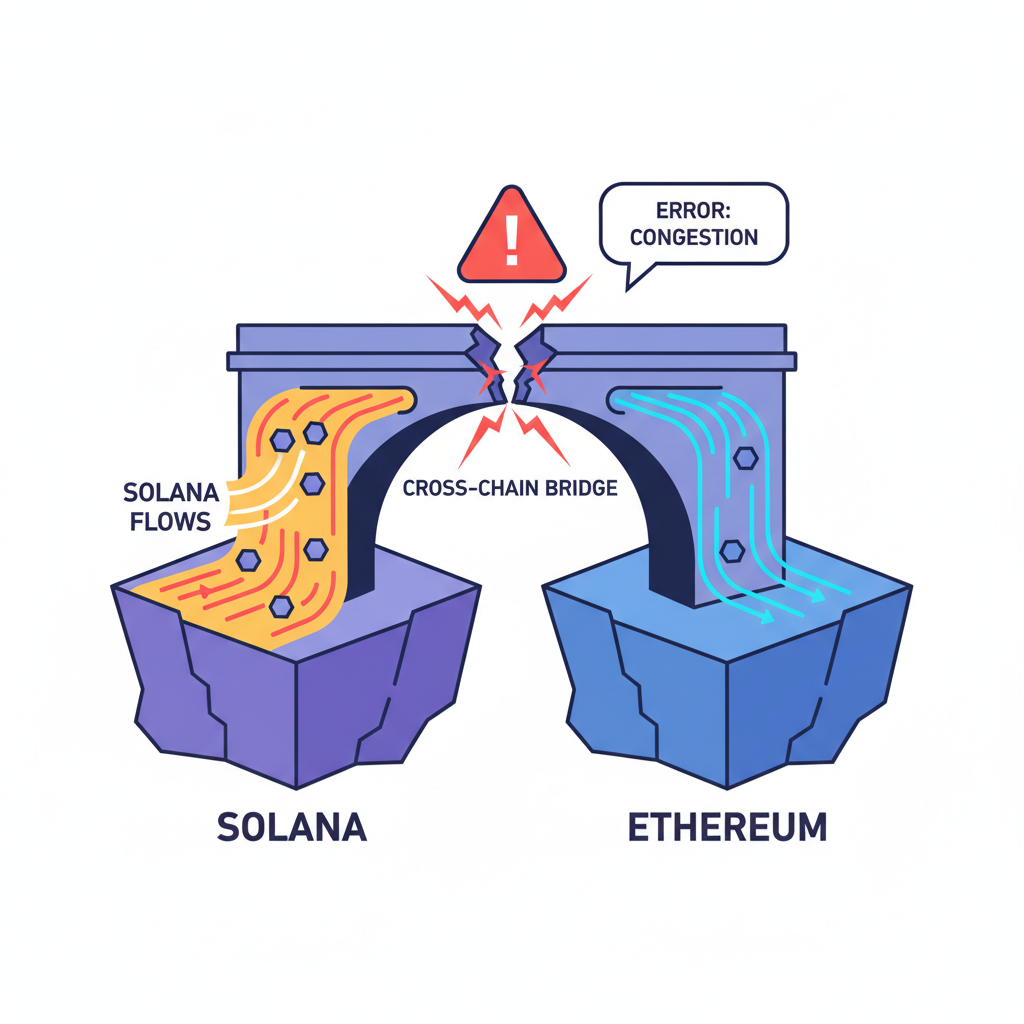
While the entry point was Solana-native, the exploit's sophistication shone in its exfiltration phase. Stolen assets funneled into USDC, then leveraged Solana Ethereum CCTP risks via bridges to Ethereum. This cross-chain hop diluted traceability, exploiting interoperability's double-edged sword. Bridges, perennial weak links, face cross-chain bridge vulnerabilities from mismatched security models and oracle dependencies.
Drift's integration with such mechanisms, while enabling liquidity, invited peril. The $285 million bridged out raises alarms for 2026's blockchain bridge audit priorities. Auditors must probe not just code, but signer workflows and bridge composability under adversarial conditions. Solana's high throughput, a boon for DeFi, accelerates drains once control flips.
Binance-Peg SOL trades at $80.99 today, up 0.66% in 24 hours with a high of $81.40 and low of $79.73. This resilience masks deeper ecosystem jitters.
Market Ripples and Protocol Resilience Under Fire
The exploit's immediacy - weeks of prep, minutes to execute - stunned observers. Drift's response, suspending operations and rallying industry allies, averted total collapse, but user confidence hangs by a thread. Over $270 million in play dwarfs prior incidents like WazirX's $235 million loss, cementing this as crypto's marquee hack of 2026.
Solana DeFi's lending sector braces for contagion, with protocols reevaluating multisig thresholds and bridge exposures. Fundamentals dictate caution: interoperability fuels growth, yet demands fortified defenses. As funds scatter across chains, recovery hinges on coordinated blacklisting and legal maneuvers, testing DeFi's decentralized ethos.
Looking ahead, SOL's trajectory post-breach offers clues. Current stability at $80.99 belies potential volatility if recoveries falter.
Solana (SOL) Price Prediction 2027-2032
Post-Drift Protocol Exploit: Recovery Outlook and Long-Term Growth Projections
| Year | Minimum Price | Average Price | Maximum Price | YoY % Change (Avg from 2026 Baseline*) |
|---|---|---|---|---|
| 2027 | $85 | $130 | $180 | +44% |
| 2028 | $110 | $180 | $260 | +38% |
| 2029 | $140 | $250 | $380 | +39% |
| 2030 | $180 | $350 | $550 | +40% |
| 2031 | $250 | $480 | $750 | +37% |
| 2032 | $320 | $620 | $950 | +29% |
Price Prediction Summary
Despite the $285M Drift Protocol exploit in April 2026 causing short-term bearishness (dip to ~$75), Solana (SOL) is expected to recover swiftly to $90+ medium-term in 2026 due to historical resilience. From 2027-2032, bullish trends driven by DeFi adoption, tech upgrades, and market cycles project average prices rising from $130 to $620, with min/max ranges reflecting bearish (regulation, competition) and bullish (ETFs, ecosystem growth) scenarios. *2026 Avg baseline: $90.
Key Factors Affecting Solana Price
- Solana's proven recovery post-exploits (e.g., Wormhole, FTX impact)
- Enhanced multisig and bridge security measures post-Drift
- High-throughput blockchain attracting DeFi, gaming, NFT projects
- Technological upgrades like Firedancer for stability/scalability
- Potential Solana ETF approvals boosting institutional inflows
- Bitcoin halving cycles and broader crypto bull markets
- Regulatory clarity vs. risks; competition from ETH L2s and L1s
- Macro factors: interest rates, global adoption trends
Disclaimer: Cryptocurrency price predictions are speculative and based on current market analysis. Actual prices may vary significantly due to market volatility, regulatory changes, and other factors. Always do your own research before making investment decisions.
Drift's saga underscores a pivotal truth in blockchain fundamentals: technology alone falters without vigilant human safeguards. Multisig setups, lauded for decentralization, crumble under social engineering if signers treat approvals as checkboxes rather than fortified gates. This multisig social engineering blockchain breach, tied to DPRK tactics via fake collateral, demands protocols rethink signer training and automation.
Timeline of the Drift Protocol Exploit
The sequence, from phishing lures to bridge escapes, exposed Solana's speed as both asset and liability. High TPS enabled the blitz drain, but also empowers rapid forensics. On-chain trails, though muddied by CCTP hops, offer recovery paths if exchanges freeze tainted flows swiftly.
ZachXBT's observations on Circle's delayed response highlight a broader issue: stablecoin issuers must balance usability with blacklisting agility. Over $230 million in USDC zipped across chains before flags flew, amplifying Solana Ethereum CCTP risks. Protocols leaning on these bridges for liquidity now face mandates for dual-audit layers - one for contracts, another for operational flows.
Fortifying Against Pre-Signed Perils and Bridge Blind Spots
To stem future pre-signed transaction attacks defi, teams should embed rigorous simulations into roadmaps. Drift's lapse stemmed from nonce misuse, a Solana quirk protocols must script against. Cross-chain messaging scanners, like those at our platform, already flag such vectors by modeling attacker timelines across bridges.
Secure Your DeFi: Step-by-Step Multisig & Bridge Audit Guide

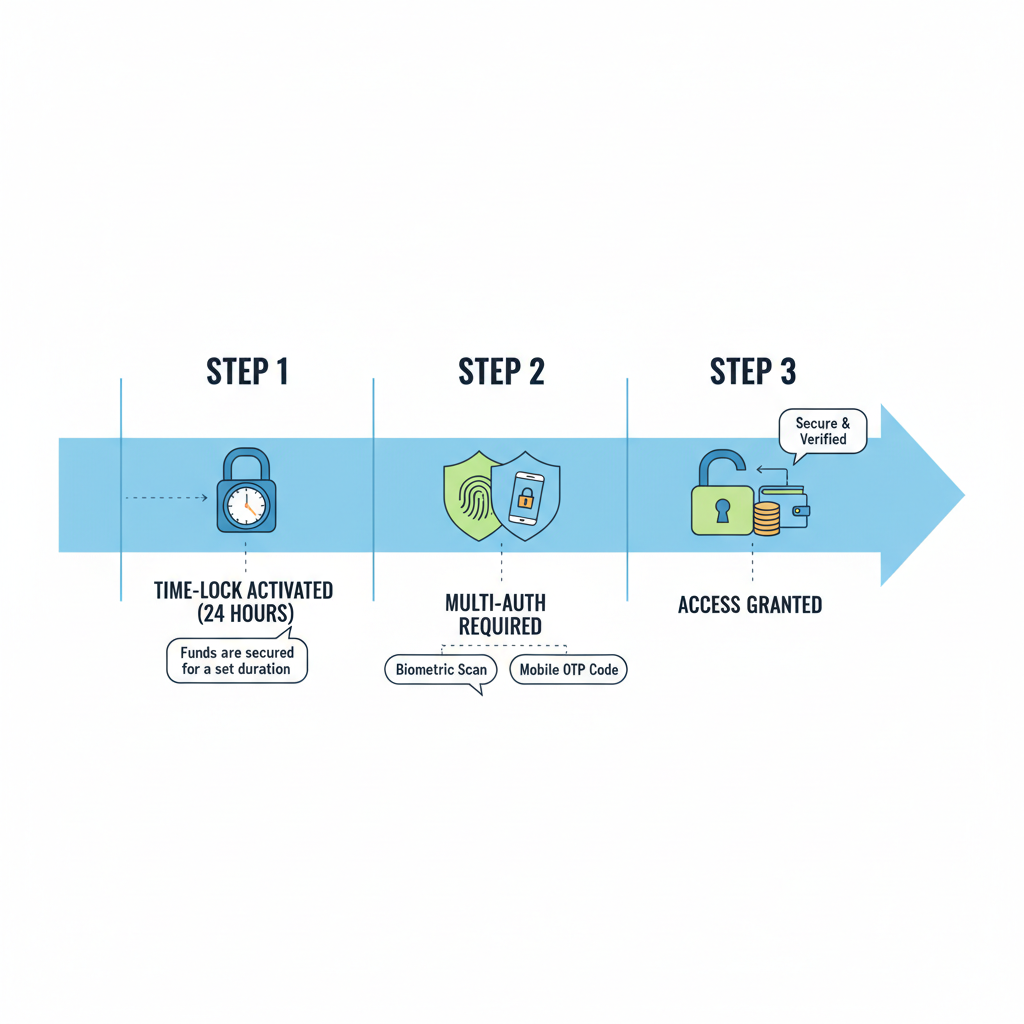
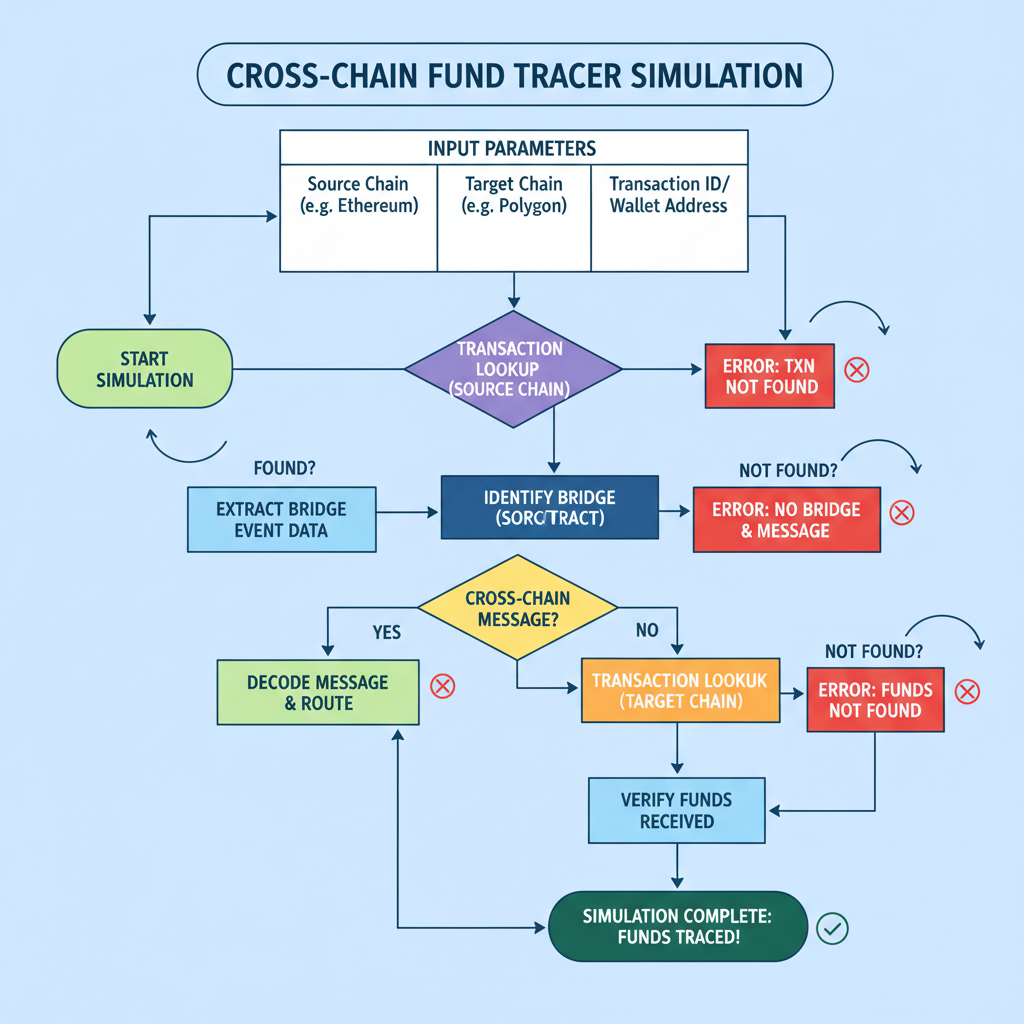
This methodical audit trail, honed over years of FRM-driven analysis, separates resilient protocols from rubble. Solana DeFi thrives on interoperability, yet bridges remain the ecosystem's soft underbelly. Wormhole's shadow looms large; now Drift cements the need for blockchain bridge audit 2026 standards prioritizing human factors.

Market data reflects measured poise amid the storm. Binance-Peg SOL holds at $80.99, with a 24-hour gain of and $0.5300 ( and 0.6590%), ranging from $79.73 to $81.40. This steadiness, post a top-tier exploit, signals Solana's maturing defenses - but complacency invites repeats.
DeFi builders must pivot: elevate multisig to quorum-plus-one models, integrate AI-driven anomaly detection for signers, and pressure bridges for shared threat intel. Recovery efforts, blending on-chain freezes and off-chain diplomacy, could reclaim chunks of the $285 million. Yet true wins lie in prevention, where thorough due diligence turns vulnerabilities into fortified strengths.
Fundamentals never go out of style. As Solana eyes $90 and rebounds, protocols that audit beyond code - into people and pipes - will lead the next interoperability wave. Drift's wound, though deep, charts the path forward for a securer cross-chain frontier.
Solana (SOL) vs. Competitors: 6-Month Price Performance Amid Drift Protocol $285M Exploit
Comparing SOL resilience post-exploit against ETH, BTC, AVAX, and other chains using real-time data as of 2026-04-04
| Asset | Current Price | 6 Months Ago | Price Change |
|---|---|---|---|
| Solana | $80.89 | $140.00 | -41.5% |
| Ethereum | $2,054.05 | $3,000.00 | -31.5% |
| Bitcoin | $67,325.00 | $65,000.00 | +3.6% |
| Avalanche | $8.95 | $16.02 | -44.1% |
| Arbitrum | $0.0926 | $0.1000 | -7.4% |
| Optimism | $0.1095 | $0.1200 | -8.8% |
| Sui | $0.8686 | $1.85 | -53.0% |
| Aptos | $0.8471 | $1.00 | -15.3% |
| NEAR Protocol | $1.27 | $4.82 | -73.7% |
Analysis Summary
Despite the $285M Drift Protocol exploit on Solana, SOL has declined 41.5% over 6 months, outperforming high-risk altcoins like NEAR (-73.7%) and Sui (-53.0%), but underperforming ETH (-31.5%) and BTC (+3.6%). This highlights Solana's relative resilience in a volatile market.
Key Insights
- Solana's -41.5% drop is milder than AVAX (-44.1%), Sui (-53.0%), and NEAR (-73.7%), showing ecosystem strength post-exploit.
- Bitcoin remains the only asset with gains (+3.6%), underscoring its safe-haven status.
- Ethereum's -31.5% decline is less severe than Solana's, amid broader Layer 1 competition.
- Layer 2 tokens like Arbitrum (-7.4%) and Optimism (-8.8%) experienced minimal drops, reflecting scaling focus.
Prices and 6-month changes (from approx. 2025-10-06 to 2026-04-04) sourced exclusively from provided real-time data via Yahoo Finance and CoinMarketCap. Changes calculated as ((Current - Past)/Past * 100), formatted precisely as given.
Data Sources:
- Main Asset: https://finance.yahoo.com/quote/SOL-USD/history?period1=1696550400&period2=1696636799
- Ethereum: https://finance.yahoo.com/quote/ETH-USD/history?period1=1696550400&period2=1696636799
- Bitcoin: https://finance.yahoo.com/quote/BTC-USD/history?period1=1696550400&period2=1696636799
- Avalanche: https://coinmarketcap.com/historical/20251104/
- Arbitrum: https://finance.yahoo.com/quote/ARB-USD/history?period1=1696550400&period2=1696636799
- Optimism: https://finance.yahoo.com/quote/OP-USD/history?period1=1696550400&period2=1696636799
- Sui: https://coinmarketcap.com/historical/20241104/
- Aptos: https://finance.yahoo.com/quote/APT-USD/history?period1=1696550400&period2=1696636799
- NEAR Protocol: https://coinmarketcap.com/historical/20241004/
Disclaimer: Cryptocurrency prices are highly volatile and subject to market fluctuations. The data presented is for informational purposes only and should not be considered as investment advice. Always do your own research before making investment decisions.




No comments yet. Be the first to share your thoughts!