Overview of 2026 regulatory shifts
The 2026 bridge safety compliance landscape marks a significant pivot for infrastructure owners, driven by updated directives from the U.S. Army Corps of Engineers (USACE) and the Federal Highway Administration (FHWA). These regulatory bodies are implementing stricter inspection protocols and reporting requirements that directly impact liability, maintenance scheduling, and capital planning for public and private bridge owners alike.
Central to these changes is the alignment with Engineering Regulation (ER) 1110-2-111 and the ongoing enforcement of 23 CFR Part 650. The 2026 updates, detailed in USACE ECB 2026-2, emphasize enhanced data integrity and more frequent structural assessments. Owners must now ensure their inspection programs meet heightened standards for documentation and risk mitigation, moving beyond traditional compliance to proactive safety management.
For infrastructure owners, these shifts represent a tangible increase in operational oversight. The new standards require a rigorous review of existing inspection cycles and a commitment to adopting more advanced diagnostic technologies. Failure to adapt to these 2026 regulatory expectations can result in compliance gaps, increased liability, and potential disruptions to critical transportation networks.
Updated inspection protocols
The 2026 regulatory landscape for bridge safety introduces mandatory revisions to inspection frequencies, methodologies, and documentation standards. These updates, driven by federal mandates including the USACE Engineering Regulation (ER) 1110-2-111 and FHWA requirements under 23 CFR Part 650, require owners to align their compliance programs with new technical benchmarks.
Inspection frequencies are now strictly calibrated to bridge risk profiles and structural age. While routine inspections generally remain on a two-year cycle, structures identified with critical components or those exceeding their design life may face reduced intervals. The new protocols emphasize condition-based assessments over fixed schedules, requiring owners to justify any deviation from standard frequencies based on recent performance data.
Methodologically, the 2026 standards mandate the integration of advanced diagnostic tools. Visual inspection remains foundational, but it must now be supplemented by non-destructive testing (NDT) for high-stress connections and fatigue-prone areas. This includes ultrasonic testing for weld integrity and magnetic particle inspection for surface cracks. Documentation must reflect these findings with geotagged, high-resolution imagery and detailed defect mapping, ensuring a verifiable audit trail for regulatory review.
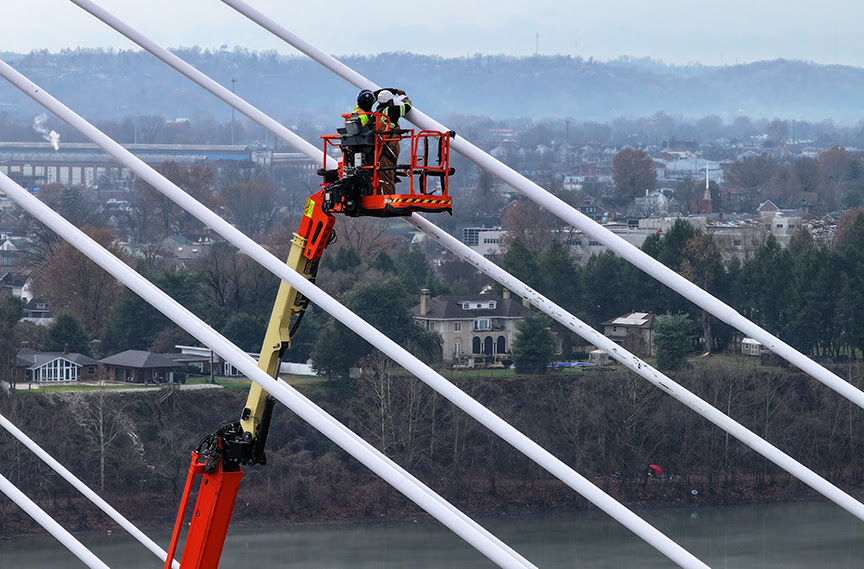
These changes reflect a broader shift toward proactive safety management. Owners must ensure their inspection teams are trained on the latest diagnostic techniques and that their digital documentation systems can handle the increased data volume and complexity required by 2026 compliance standards.
2026 Bridge Safety Compliance Timeline
The transition to the updated bridge safety standards is not instantaneous. Federal agencies, including the USACE and FHWA, have established a phased rollout to allow owners time to adjust inspection protocols and maintenance schedules. The following timeline outlines the critical deadlines for compliance under the 2026 regulatory framework.
The new inspection requirements under ER 1110-2-111 and 23 CFR Part 650 become effective. Owners must begin using updated checklists and reporting formats for all routine inspections conducted after this date. Field teams are expected to evaluate structures against the new criteria immediately.
A six-month grace period allows owners to update internal software and documentation systems to align with the new federal standards. During this window, minor administrative discrepancies in reporting will not trigger penalties, provided the physical inspection data is accurate and collected per the new guidelines.
Administrative compliance is fully enforced. Inspection reports submitted after this date must strictly adhere to the new formatting and data entry requirements. Agencies will begin auditing records for consistency, and non-compliant reports may be rejected or require resubmission.
Owners must submit their first full-year compliance reports under the 2026 standards. This period also marks the deadline for any deferred maintenance items identified during the initial inspections to be addressed or formally documented in long-term repair plans.
The phased approach ensures that bridge owners can integrate the new safety standards without disrupting critical infrastructure operations. Monitoring these deadlines is essential for maintaining compliance and ensuring the structural integrity of public assets.
Common compliance pitfalls
Owners navigating the 2026 bridge compliance standards frequently encounter structural and procedural errors that trigger regulatory penalties or safety liabilities. The transition from previous inspection cycles to the 2026 framework demands precise adherence to updated documentation and physical assessment protocols. Misalignment in these areas often stems from outdated internal workflows rather than a lack of intent to comply.
Incomplete or outdated structural documentation
One of the most cited deficiencies involves the failure to maintain current structural records. The 2026 standards require explicit alignment between physical bridge conditions and digital asset registries. Owners who rely on legacy data sets often miss critical updates regarding material degradation or load capacity changes. This discrepancy creates a gap between reported safety metrics and actual structural integrity, a violation that federal auditors flag during routine reviews.
Misinterpretation of inspection frequency mandates
The revised standards adjust inspection intervals based on bridge age and traffic volume. A common error is applying the previous cycle’s timeline to 2026 assets, resulting in missed mandatory evaluations. For instance, older structures with accelerated deterioration rates now require more frequent visual and detailed inspections. Failing to adjust these schedules exposes owners to liability if an incident occurs during an uninspected period.
Inadequate documentation of corrective actions
Identifying a defect is only half the compliance requirement; documenting the remediation process is equally critical. The 2026 guidelines emphasize traceable records for all corrective measures, including engineering approvals and completion dates. Owners who neglect to archive these documents alongside inspection reports leave themselves vulnerable during compliance audits. Without this paper trail, even minor deferred maintenance issues can be classified as systemic non-compliance.
Neglecting jurisdictional reporting windows
State and local agencies must submit compliance reports within strict statutory windows. Delays in data entry or administrative bottlenecks often cause owners to miss these deadlines. The 2026 framework links timely reporting directly to eligibility for certain infrastructure grants. Late submissions are treated as active non-compliance, regardless of the actual physical condition of the bridge.
Frequently Asked Questions on 2026 Bridge Safety Compliance
The following questions address common operational concerns for infrastructure owners navigating the 2026 regulatory updates. These answers reflect current guidance from the USACE and FHWA.
For detailed technical specifications, refer to the USACE ECB 2026-2 guidance and the FHWA NBIS manual.
No comments yet. Be the first to share your thoughts!