2026 bridge safety limits to account for
The federal infrastructure updates taking effect in 2026 have tightened the rules for bridge owners, shifting the focus from general maintenance to rigorous, data-driven safety programs. With the American Society of Civil Engineers reporting that 6.8% of the nation’s 623,000 bridges are in poor condition, the new standards aim to prevent failures by mandating clearer inspection protocols and faster response times for structural deficiencies ASCE Bridge Infrastructure Report.
These constraints apply to both public and private bridges, requiring owners to establish minimum safety program components that ensure economical yet adequate protection. The updates emphasize proactive risk management over reactive repairs, meaning owners must now document inspection histories, maintain real-time monitoring data, and implement corrective actions before minor issues become critical failures ASCE Policy Statement 208.
For owners, this means updating internal checklists to align with the new federal definitions of "significant structural deficiency" and "critical inspection intervals." Failure to comply can result in reduced federal funding eligibility or increased liability in the event of an incident. The goal is not to burden owners but to standardize safety expectations across jurisdictions, ensuring that every bridge, regardless of size, meets a consistent baseline of structural integrity.
2026 bridge safety choices that change the plan
The 2026 federal infrastructure updates shift the burden of proof from reactive repair to proactive verification. For bridge owners, this means balancing immediate operational continuity against the capital intensity of new inspection and reinforcement mandates. The choice is rarely between safety and cost; it is between planned maintenance and emergency intervention.
The new regulations emphasize data-driven decision-making. Owners must now justify their maintenance schedules with concrete evidence of structural integrity rather than relying on historical precedent. This requires a shift in how resources are allocated across the portfolio.
| Factor | Proactive Maintenance | Reactive Repair | Risk Profile |
|---|---|---|---|
| Cost Predictability | High (budgeted annually) | Low (emergency spikes) | High volatility in reactive models |
| Service Life | Extended (10-15 years) | Shortened (component failure) | Accelerated degradation |
| Inspection Frequency | Quarterly/Digital | Annual/Visual only | Higher regulatory scrutiny |
| Downtime Impact | Minimal (scheduled) | Significant (closure) | Revenue loss during closures |
Proactive maintenance aligns with the American Society of Civil Engineers' policy on minimum safety programs, which argues for economical, consistent oversight rather than sporadic fixes ASCE Policy 208. While the upfront cost is higher, the long-term liability of a structural failure far exceeds the price of routine reinforcement.
Reactive repair often appears cheaper in the short term but ignores the compounding costs of traffic disruptions, legal liabilities, and accelerated deterioration. With nearly 44% of US bridges already in "good" condition and 6.8% in "poor" condition, the margin for error is shrinking ASCE Report Card.
The tradeoff is clear: invest in verification now, or pay for failure later. The 2026 updates remove the option of ignoring the data.
How to Apply the New 2026 Bridge Safety Regulations
The 2026 federal infrastructure updates shift bridge safety from a reactive reporting model to a proactive, data-driven standard. For owners of public or private bridges, compliance now requires a structured program that prioritizes continuous monitoring over periodic inspections. The American Society of Civil Engineers (ASCE) defines the minimum components necessary for an adequate and economical safety program, emphasizing that structural integrity depends on consistent, documented oversight.
With nearly half of the nation’s 623,000 bridges currently rated in fair condition, the margin for error has narrowed. The new regulations demand that owners establish clear protocols for risk assessment, maintenance scheduling, and emergency response. This section outlines the practical steps to align your bridge portfolio with the updated federal requirements, ensuring compliance while maximizing asset longevity.
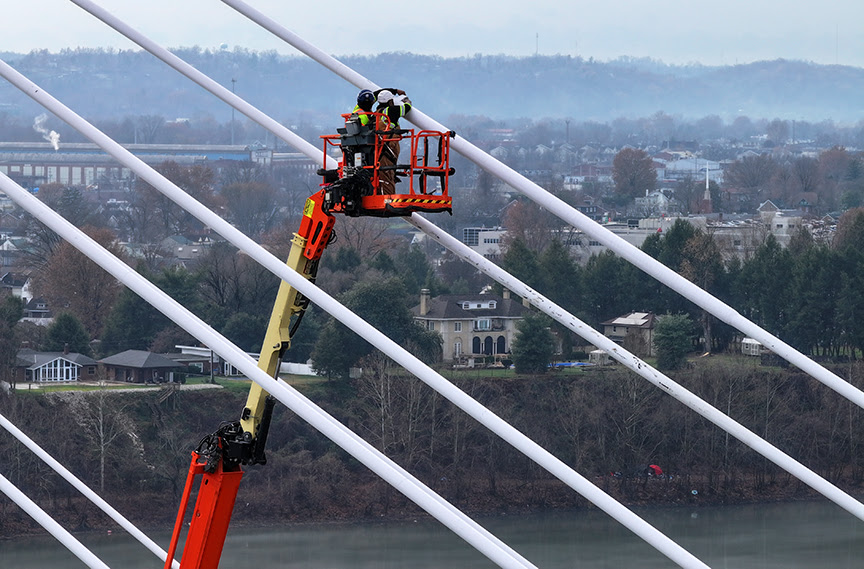
Begin by reviewing all inspection records from the past five years. The 2026 updates require a verified baseline of structural health metrics, including load capacity, corrosion levels, and foundation stability. If your current data is fragmented or outdated, commission a comprehensive condition assessment immediately. This baseline serves as the foundation for all future compliance reporting and helps identify critical vulnerabilities before they become liabilities.
Move beyond annual visual inspections by installing structural health monitoring (SHM) sensors. The new regulations prioritize real-time data on stress, vibration, and environmental exposure. For high-traffic or aging bridges, SHM systems provide early warning signs of structural fatigue. This shift from periodic to continuous monitoring allows for predictive maintenance, reducing the risk of sudden failures and aligning with the ASCE’s emphasis on economical, proactive safety programs.
Replace fixed-interval maintenance with a risk-based approach. Prioritize resources for bridges with higher traffic volumes, heavier loads, or known structural weaknesses. The 2026 updates require owners to demonstrate that maintenance decisions are driven by data, not just calendar schedules. Document the rationale for each intervention, linking it directly to inspection findings and monitoring data to satisfy federal auditors.
A compliant safety program must include a clear, tested emergency response plan. This protocol should detail immediate actions for structural anomalies, including bridge closures, traffic rerouting, and communication chains with local authorities. Regular drills ensure that staff can execute these steps efficiently. The new regulations emphasize that preparedness is as critical as physical repairs, requiring owners to prove their ability to respond swiftly to emerging threats.
Finally, consolidate all audit results, monitoring data, maintenance logs, and emergency protocols into a unified compliance dossier. Federal agencies will require transparent, accessible records to verify adherence to the 2026 standards. Use digital platforms to streamline data collection and reporting, ensuring that information is accurate, up-to-date, and easily retrievable. This documentation is your proof of diligence and a key factor in maintaining operational approval.
-
Verify baseline inspection data is complete and recent
-
Install or upgrade structural health monitoring sensors
-
Transition to risk-based maintenance scheduling
-
Document and test emergency response protocols
-
Submit unified compliance dossier to federal authorities
Spotting weak compliance options
Bridge owners often mistake routine maintenance for regulatory compliance, leaving gaps in safety protocols. The 2026 federal updates require more than just patching potholes; they demand rigorous inspection regimes and documented structural integrity assessments. Misleading claims in vendor proposals frequently downplay the cost of full component replacement versus superficial repairs. Owners must verify that proposed solutions meet the new minimum safety program components outlined by federal guidelines.
Common mistakes in bridge safety planning
One frequent error is assuming that all bridges fall under the same inspection frequency. The American Society of Civil Engineers reports that 49.1% of US bridges are in fair condition, meaning many require more frequent attention than standard schedules allow. Owners should check their specific bridge inventory against the latest federal infrastructure report cards to identify which structures need immediate, enhanced scrutiny. Ignoring this data can lead to costly emergency repairs or regulatory penalties.
Verifying vendor claims
When reviewing proposals from engineering firms or maintenance contractors, scrutinize their methodology for structural analysis. Do they reference the latest ASCE policy statements? Are their inspection tools calibrated to current federal standards? A credible partner will provide transparent documentation of their assessment process, including detailed reports on load-bearing capacities and material degradation. Avoid vendors who offer vague guarantees or skip the initial comprehensive audit phase.
2026 bridge safety: what to check next
Owners and operators face new federal mandates that tighten inspection timelines and liability standards. The following clarifications address the most common practical concerns regarding compliance deadlines and structural assessments.
No comments yet. Be the first to share your thoughts!