
Bridge monitoring 2026
The standard for bridge monitoring in 2026 has shifted from passive inspection to active, continuous health tracking. Engineers now rely on digital Structural Health Monitoring (SHM) systems that provide real-time data on a bridge's condition. This shift allows for the early detection of structural issues before they pose safety risks or require costly emergency repairs.
A bridge monitoring system works by utilizing advanced sensors to gather nearly real-time data on stress, vibration, and environmental factors. This continuous assessment ensures safety and longevity by flagging anomalies instantly. For instance, Kistler recently showcased a fully digital SHM solution designed specifically for this real-time monitoring capability at Intertraffic Amsterdam 2026.
The future of bridge engineering is defined by this integration of smart technologies and adaptive materials. By moving away from periodic manual checks, agencies can enhance resilience and efficiency. The data collected feeds directly into predictive maintenance models, ensuring that resources are allocated only where needed, rather than on a fixed schedule.
Bridge monitoring 2026 choices that change the plan
Selecting a structural health monitoring (SHM) system for 2026 requires balancing data density against operational friction. The industry has shifted from manual inspections to continuous AI-driven surveillance, but not all sensor arrays offer the same return on investment. Engineers must evaluate installation complexity, data latency, and integration capabilities before committing to a specific hardware stack.
The following comparison highlights the primary tradeoffs between the leading monitoring approaches available in 2026. These metrics reflect current market capabilities for real-time structural assessment.
Fiber optic systems provide the most comprehensive data for long-term asset management, making them ideal for critical infrastructure where failure is not an option. However, the upfront cost of embedding sensors during construction or retrofitting with cabling can be prohibitive for smaller municipal bridges. Wireless IoT solutions offer a faster, cheaper deployment but require careful battery management and may suffer from signal interference in steel-heavy environments.
For vibration-based monitoring, accelerometer arrays remain the industry standard for detecting dynamic loads from traffic and wind. These systems are highly reliable and easy to integrate with existing AI models, though they lack the strain and temperature data provided by fiber optics. The best approach often involves a hybrid strategy, using wireless sensors for broad coverage and fiber optics for critical stress points.
When evaluating vendors, prioritize systems that offer open API access for custom AI model training. Closed ecosystems may limit your ability to switch providers or integrate new algorithms as technology evolves. Look for solutions that support edge computing, allowing initial data filtering on the sensor itself to reduce cloud storage costs and bandwidth usage.
How to choose the right bridge monitoring system
Selecting a bridge monitoring system requires balancing real-time data needs with budget constraints and existing infrastructure. The goal is to detect structural anomalies before they become safety risks, using a framework that prioritizes actionable insights over raw data volume.

Start by identifying the specific vulnerabilities of your structure. Is it fatigue in welds, corrosion in rebar, or excessive vibration from traffic? A system designed for seismic monitoring will not effectively detect slow-moving corrosion. Pinpointing the primary threat ensures you invest in sensors that measure the right physical parameters, such as strain, tilt, or acceleration.
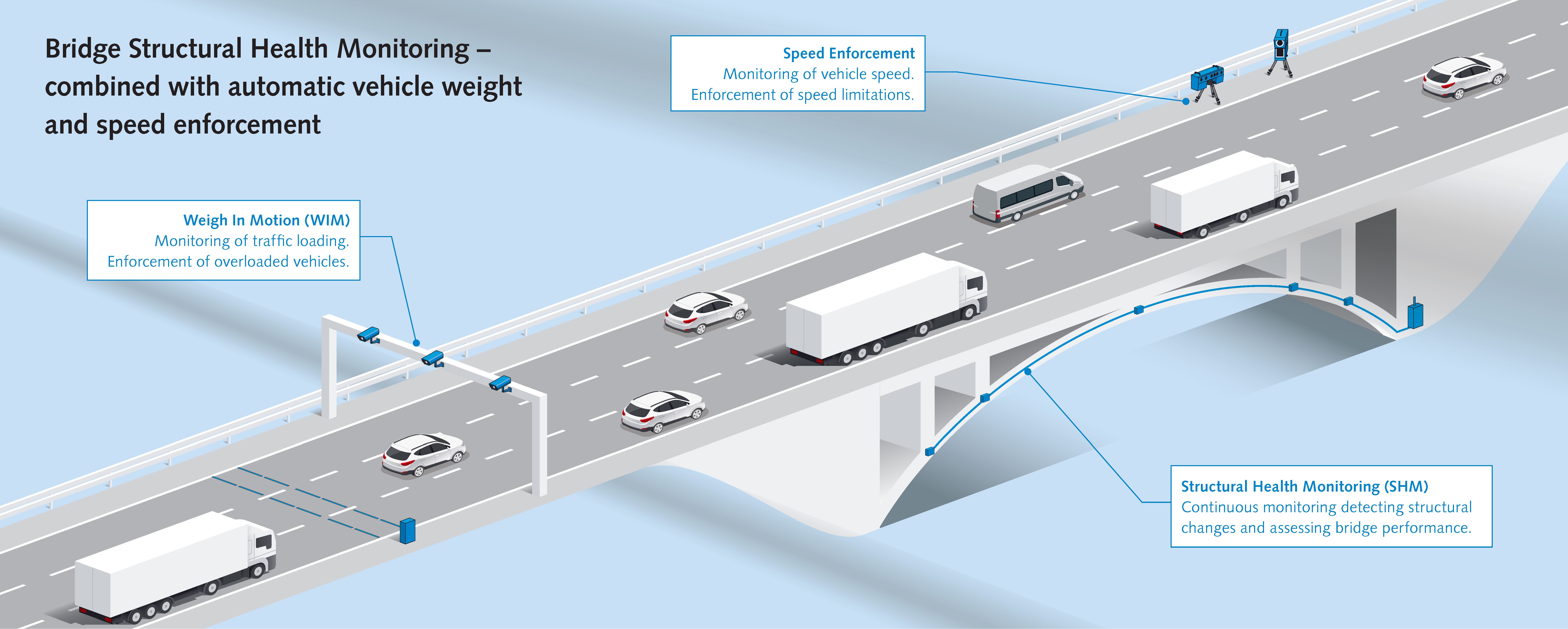
Choose between traditional wired sensors and emerging wireless IoT nodes. Wired systems offer high bandwidth and reliability for permanent installations but require extensive trenching. Wireless IoT sensors, like those showcased by Kistler for digital structural health monitoring, allow for rapid deployment and scalability, making them ideal for retrofitting older bridges where drilling is impractical.

Raw data is useless without context. Ensure the chosen system integrates with your existing asset management software. The future of bridge engineering relies on adaptive materials and smart technologies that feed into centralized dashboards. Verify that the vendor provides open APIs or compatible protocols to prevent data silos and enable seamless analysis by your engineering team.
Infrastructure is often remote and harsh. Prioritize sensors with long battery lives or energy-harvesting capabilities. Consider the lifecycle cost of maintenance; a system that requires frequent battery changes on a high-rise bridge incurs significant labor costs. Opt for ruggedized hardware designed to withstand environmental stressors like humidity, temperature swings, and vibration.
By following this structured approach, you can implement a monitoring solution that enhances resilience and longevity without unnecessary complexity. Focus on systems that provide clear, actionable alerts rather than overwhelming data streams.
Watchouts in Bridge Safety Tech
The market for AI-powered structural health monitoring (SHM) is crowded with vendors making bold claims. Not every sensor array delivers the resilience engineers need. Before committing to a system, distinguish between marketing hype and functional infrastructure. The goal is to avoid weak options that fail under real-world stress or produce data too noisy to act on.
The "Set and Forget" Trap
Many vendors market their sensors as maintenance-free, but this is often misleading. IoT devices in bridge environments face vibration, temperature swings, and moisture. A sensor that ignores environmental calibration drift will feed false positives into your AI model, triggering unnecessary closures. Look for systems that offer self-diagnostic routines or automated baseline adjustments, not just raw data streams.
Vague Compliance Claims
Be wary of providers who cite "global standards" without specifying which ones. A system might comply with ISO 17025 for lab calibration but lack the ruggedization for highway deployment. Ensure the hardware meets specific environmental protection ratings (like IP67) and that the software integrates with your existing civil engineering workflows, such as BIM or CMMS platforms. If the vendor cannot show a clear path to your existing safety protocols, the system is likely an isolated silo.
Data Overload Without Action
Collecting terabytes of vibration data is useless if you cannot interpret it. Weak options dump raw feeds into a cloud dashboard without context. The best systems provide edge computing capabilities to filter noise locally and only alert on anomalies. Prioritize platforms that offer clear thresholds for action, rather than just visualization. You need a system that tells you what is wrong, not just that something is happening.
Bridge monitoring 2026: what to check next
What is a bridge monitoring system?
A bridge monitoring system is a network of sensors attached to a structure that continuously measures stress, vibration, and movement. Instead of waiting for visible cracks or scheduled inspections, these systems gather real-time data on the bridge’s health. This allows engineers to detect hidden issues early, ensuring safety and preventing costly emergency repairs before they become critical failures.
What is the future of bridge engineering?
The field is shifting from reactive repairs to predictive maintenance using digital twins and AI. The global market for these systems is projected to grow from $1.4 billion in 2026 to $3.1 billion by 2033. This expansion is driven by the need for resilient infrastructure that can withstand extreme weather and heavy traffic loads through adaptive, smart technologies rather than traditional manual checks.
How do sensors prevent structural failures?
Sensors act as the bridge’s nervous system, transmitting data to analytics platforms that flag anomalies. For example, if a sensor detects unusual vibration patterns that differ from normal traffic loads, it alerts maintenance teams to investigate immediately. This proactive approach stops minor wear from escalating into catastrophic failures, significantly extending the lifespan of aging infrastructure.
What are the main components of SHM?
Structural Health Monitoring (SHM) relies on four core steps: planning the sensor placement, collecting data, running analytics, and making decisions. Modern setups use IoT-connected devices to automate this flow. The data is processed to identify trends, allowing officials to prioritize repairs based on actual structural needs rather than arbitrary schedules.
No comments yet. Be the first to share your thoughts!