
2026 monitoring market expansion
The structural health monitoring (SHM) market is entering a period of significant expansion in 2026, driven by the urgent need to manage aging infrastructure and increasing regulatory pressure. Industry projections indicate that the global market, valued at approximately USD 3,582.4 million in 2026, is expected to grow to nearly USD 8,667.3 million by 2033. This trajectory reflects a compound annual growth rate that underscores the shifting priority from reactive maintenance to proactive, data-driven asset management.
This growth is not merely a reflection of increased spending but a fundamental shift in how bridge owners approach risk. As civil assets age, the cost of failure rises exponentially, making real-time monitoring and fatigue prediction essential rather than optional. The integration of advanced sensors and AI-driven analytics allows engineers to detect micro-fractures and stress anomalies long before they become critical, transforming maintenance from a scheduled expense into a precise, evidence-based operation.
The financial implications are substantial. By leveraging SHM technologies, municipalities and private infrastructure owners can extend the lifespan of existing bridges, delaying the massive capital outlay required for replacement. This efficiency is particularly critical in regions with dense transportation networks where downtime carries heavy economic penalties. As the market matures, the focus remains on delivering actionable insights that enhance safety while optimizing long-term operational budgets.
Source: Coherent Market Insights, Structural Health Monitoring Market Size & Trends, 2026-2033
Real-time networks replace manual checks
The bridge maintenance sector is undergoing a structural shift, moving from reactive, periodic manual inspections to continuous, real-time data streams. For infrastructure investors and asset managers, this transition is no longer a theoretical upgrade but an immediate operational necessity. The high-stakes nature of structural integrity, underscored by recent catastrophic failures, has accelerated the adoption of fully digital sensor solutions that provide 24/7 visibility into bridge health.
Kistler’s debut of its fully digital structural health monitoring solution at Intertraffic 2026 in Amsterdam exemplifies this market shift. Unlike legacy systems that rely on fragmented data collection, these new networks deploy dense arrays of piezoelectric and fiber-optic sensors across critical load-bearing points. This infrastructure captures high-frequency vibration, strain, and temperature data, creating a digital twin of the physical asset. The result is a move from estimating fatigue based on traffic counts to measuring it through actual mechanical stress.
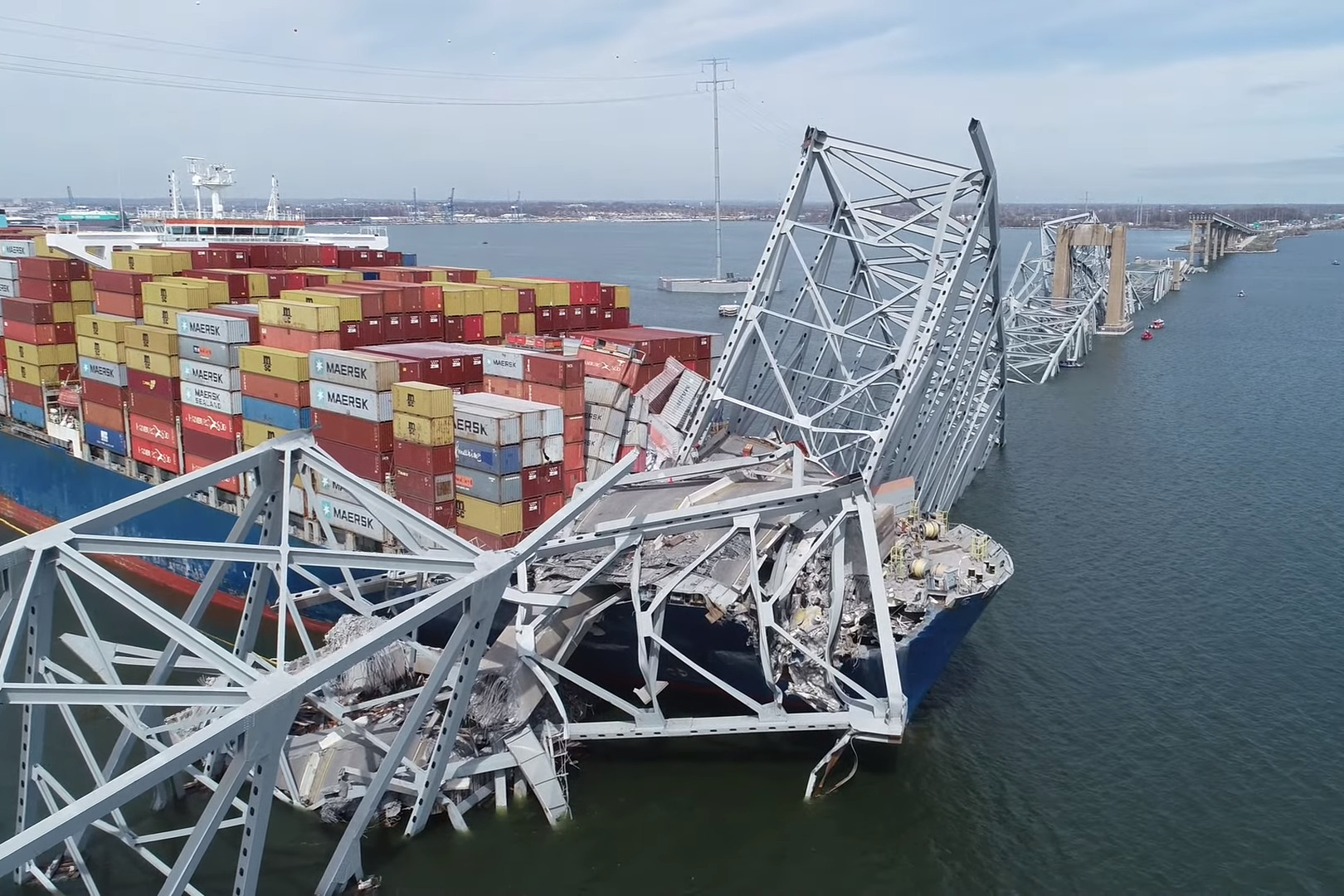
This technological leap directly addresses the vulnerabilities exposed by recent infrastructure failures. By replacing the blind spots inherent in annual or bi-annual visual inspections, real-time networks detect micro-fractures and excessive deflection before they escalate into critical failures. For financial models underpinning infrastructure bonds and public-private partnerships, this data provides the transparency required to accurately price risk and allocate maintenance capital, reducing the likelihood of catastrophic, unplanned shutdowns.
The integration of these sensor networks into existing bridge management systems is reshaping the market landscape. As the industry moves toward mandatory digital monitoring standards in major jurisdictions, the demand for reliable, real-time structural health data is projected to grow significantly through 2033. This shift represents a fundamental change in how infrastructure assets are valued, maintained, and insured, prioritizing predictive analytics over reactive repair.
AI Algorithms Predict Structural Fatigue Early
Artificial intelligence has moved beyond simple data collection to become the central nervous system of modern bridge management. By ingesting vast streams of sensor data—strain gauges, accelerometers, and acoustic emissions—machine learning models detect micro-fractures and fatigue patterns that human inspectors cannot see. This shift transforms maintenance from a reactive, calendar-based expense into a predictive, condition-based necessity.
The core challenge in structural health monitoring (SHM) is distinguishing between normal operational vibrations and the subtle, irregular signals of material degradation. Traditional threshold-based systems often generate false positives, leading to unnecessary closures and budget waste. AI algorithms, particularly deep learning models like convolutional neural networks (CNNs), analyze these time-series data points to identify anomalies with high precision. They learn the "baseline" behavior of a specific bridge under varying weather and traffic loads, flagging deviations that indicate potential structural compromise.
This predictive capability is critical for aging infrastructure. As noted in recent industry analyses on Industry 5.0 advancements, the integration of AI into SHM allows for real-time risk assessment. Instead of waiting for visible cracks or scheduled inspections, engineers receive alerts when fatigue damage initiates. This early warning system extends the service life of critical assets and prevents catastrophic failures, aligning with the high-stakes requirements of infrastructure finance and public safety.
The market for these AI-driven SHM solutions is expanding rapidly as governments mandate stricter safety protocols. The transition to predictive maintenance is not just a technical upgrade but a financial imperative, reducing long-term lifecycle costs and minimizing the economic impact of unexpected bridge closures.
Investment flows into smart infrastructure
The financial landscape for bridge structural health monitoring (SHM) is shifting from discretionary maintenance to mandatory capital allocation. As the market expands, the cost of inaction—defined by deferred maintenance and catastrophic failure risk—now outweighs the upfront investment in sensor networks and AI analytics. For infrastructure managers and investors, the focus has moved beyond initial deployment costs to the total cost of ownership over a 10-year horizon.
Traditional inspection methods rely on manual labor and periodic visual assessments, creating significant operational drag. In contrast, AI-driven SHM systems require higher initial capital expenditure (CapEx) for hardware installation but drastically reduce operational expenditure (OpEx) through automated data processing and predictive maintenance. This shift allows agencies to extend asset lifespans and optimize resource allocation, turning passive infrastructure into active, data-generating assets.
The following comparison illustrates the projected financial divergence between legacy inspection protocols and integrated AI-driven SHM systems over a decade. While traditional methods appear cheaper initially, the cumulative costs of labor, traffic disruption, and reactive repairs typically exceed the steady, predictable costs of continuous monitoring.
| Category | Traditional Inspection | AI-Driven SHM | 10-Year Trend |
|---|---|---|---|
| Initial Setup | Low | High | CapEx shift |
| Labor Costs | High (Manual) | Low (Automated) | Declining |
| Downtime Impact | Significant | Minimal | Reduced |
| Failure Risk | Reactive | Predictive | Mitigated |
Market projections indicate that the global structural health monitoring market will grow from an estimated USD 3.58 billion in 2026 to nearly USD 8.67 billion by 2033. This growth is driven by the urgent need to retrofit aging infrastructure with smart sensors that provide real-time fatigue prediction and load monitoring. Investors are increasingly viewing SHM integration not as a technology upgrade, but as a critical risk mitigation strategy that preserves the value of long-term infrastructure assets.
Industry events shaping 2026 standards
The 2026 conference calendar serves as the primary testing ground for new Structural Health Monitoring (SHM) protocols. Industry leaders are moving beyond theoretical AI models to validate real-time fatigue prediction and Industry 5.0 integration in live environments. These gatherings define the technical baselines that infrastructure operators will adopt for the next decade.
The European Week on Structural Health Monitoring (EWSHM 2026) in Toulouse, scheduled for July 7–10, remains the central forum for this shift. Special sessions are dedicated to interoperability standards and the deployment of digital twins in critical bridge assets. Attendees are expected to review pilot data from major European corridors, establishing a benchmark for sensor network reliability.
Parallel to the European focus, the International Conference on Bridge Engineering and Structural Health Monitoring (ICBESHM-26) in Bordeaux (July 25–26) addresses the Asian and North American market dynamics. This event highlights the convergence of IoT infrastructure with predictive maintenance algorithms. The proceedings will likely influence procurement standards for next-generation monitoring hardware.
These events are not merely academic; they are setting the compliance frameworks for public infrastructure investment. Professionals must monitor these sessions to anticipate the regulatory changes affecting bridge maintenance budgets and technology procurement in the 2026–2033 cycle.
No comments yet. Be the first to share your thoughts!