Federal inspection mandates for 2026
Federal bridge safety regulations remain the primary legal framework governing infrastructure maintenance in the United States. For 2026, the Federal Highway Administration (FHWA) continues to enforce 23 CFR Part 650, Subpart B, which establishes the National Bridge Inspection Standards (NBIS). These standards mandate that every bridge in the National Bridge Inventory (NBI) undergo a visual inspection at least once every 24 months. This federal mandate applies to all public bridges, regardless of whether they are owned by state departments of transportation, local municipalities, or other public entities.
The core requirement is the 540-day maximum interval between inspections. This strict timeline ensures that structural degradation is identified before it compromises safety. Inspections must be performed by Minimum Qualification Standards (MQS) certified inspectors. The agency audits state programs through document review and field verification to ensure compliance. Failure to adhere to these federal timelines can result in significant penalties and the potential loss of federal highway funding.
In addition to FHWA regulations, the U.S. Army Corps of Engineers (USACE) maintains its own bridge safety program under Engineering Regulation (ER) 1110-2-111. USACE manages bridges on federal property, including those within navigation channels and military installations. The 2026 USACE guidelines align with federal NBIS requirements but add specific protocols for military infrastructure resilience. State and local jurisdictions must coordinate with USACE when inspections overlap or when federal land is involved.
Note: The 540-day maximum interval between National Bridge Inventory inspections is a strict federal mandate. Missing this window triggers compliance violations and potential funding risks.
The regulatory landscape for 2026 requires rigorous documentation. Inspection reports must be submitted to the FHWA within specified timeframes. These records form the legal basis for maintenance decisions and liability assessments. Engineers and legal professionals must ensure that all inspection activities are meticulously documented to satisfy both federal and state auditing requirements.
usace engineering regulation updates
The USACE Bridge Safety Program operates under Engineering Regulation (ER) 1110-2-111, which establishes the federal framework for maintaining military and federal infrastructure. In 2026, the Army Corps of Engineers released ECB 2026-2, a significant update that modifies inspection and evaluation protocols to align with emerging AI monitoring technologies. This directive applies to all USACE-owned bridges across federal jurisdictions, ensuring that state and local partners adhere to uniform safety standards during maintenance cycles.
ECB 2026-2 mandates the integration of automated data collection into routine inspections. Engineers must now incorporate AI-driven analysis for structural health monitoring, replacing manual visual checks with continuous digital surveillance where feasible. This shift requires updated documentation practices and stricter adherence to the 540-day maximum inspection interval defined in 23 CFR Part 650. The regulation emphasizes that AI tools serve as supplements to, not replacements for, professional engineering judgment.
Compliance with these 2026 updates is subject to annual audit by the Federal Railroad Administration (FRA) for rail bridges and USACE internal review for highway structures. Facilities failing to implement the new AI monitoring standards face corrective action plans. The regulation underscores that federal funding for bridge repairs remains contingent upon strict adherence to these revised inspection protocols.
ai sensors in structural monitoring
The integration of artificial intelligence with smart sensors is fundamentally altering bridge inspection protocols across the United States. By 2026, Federal guidelines and State transportation departments are moving away from reliance on periodic visual inspections. Instead, infrastructure managers are adopting continuous monitoring systems that provide real-time data on structural health. This shift allows for the detection of anomalies, such as stress fractures or excessive vibration, long before they become visible to the human eye.
Smart sensors are embedded directly into bridge trusses and decks to track critical metrics. These devices transmit data to centralized systems where AI algorithms analyze patterns for signs of degradation. The agency supports this transition as a means to improve the reliability of the National Bridge Inventory. Continuous data streams reduce the uncertainty inherent in traditional two-year or biennial inspection cycles, providing a more accurate picture of asset condition.
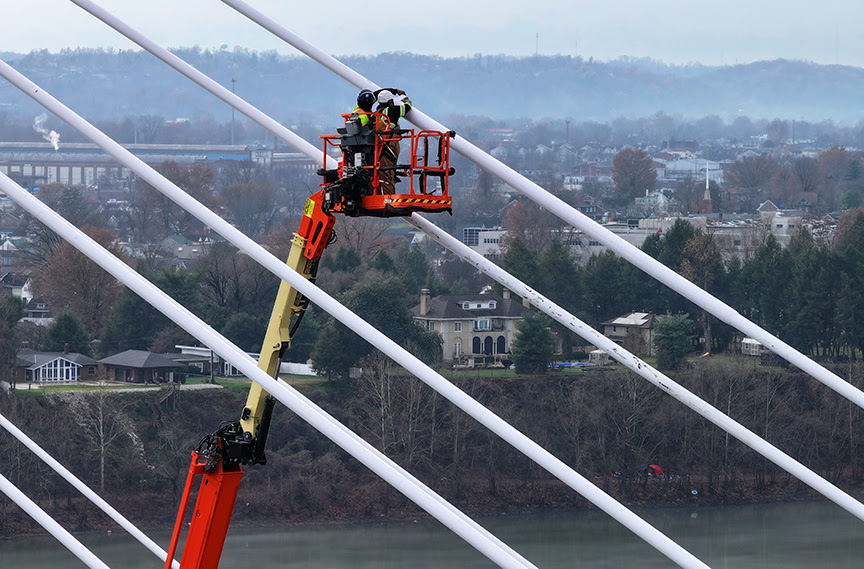
The adoption of these technologies is being coordinated by various jurisdictions. The U.S. Army Corps of Engineers (USACE) is evaluating similar sensor networks for its water resource projects. Meanwhile, State DOTs are beginning to require AI-driven monitoring for high-risk structures. This regulatory landscape ensures that safety standards evolve alongside technological capabilities. The goal is to prevent catastrophic failures by maintaining constant vigilance over critical infrastructure.
This move toward intelligent monitoring represents a significant change in how bridge safety is managed. It aligns with the broader industry trend toward resilient infrastructure. By leveraging AI, agencies can prioritize maintenance resources more effectively. The result is a safer, more data-driven approach to preserving the nation's bridge network.
aashto standards and design codes
The American Association of State Highway and Transportation Officials (AASHTO) is actively revising its bridge design and maintenance standards to integrate AI-driven monitoring data. These updates, targeted for implementation in 2026, reflect a shift from periodic physical inspections to continuous structural health monitoring. The Federal Highway Administration (FHWA) supports these changes, emphasizing that digital data streams must meet rigorous validation protocols before influencing maintenance decisions.
AASHTO’s Committee on Bridges and Structures is developing new guidelines for interpreting sensor data. These guidelines address how real-time metrics from AI systems can supplement or, in specific cases, replace traditional visual inspections. The focus is on establishing clear thresholds for automated alerts and ensuring that state transportation departments can legally rely on digital evidence for critical safety assessments.
Federal regulations currently require annual inspections for all bridges in service, with no more than 540 days between visits. The 2026 updates aim to streamline this process by allowing AI systems to flag anomalies that require immediate human verification. This hybrid approach seeks to reduce inspection backlogs while maintaining the high safety standards mandated by USACE and state-level regulatory bodies.
For engineers and legal professionals, these changes mean a new layer of documentation is required. AI-generated reports must be archived alongside traditional inspection logs to provide a complete audit trail. The goal is to create a transparent, defensible record that demonstrates how technology has been used to enhance, rather than replace, human judgment in bridge safety.
2026 compliance checklist for agencies
Transportation agencies must align their 2026 inspection programs with updated federal and state mandates. The integration of AI monitoring tools requires rigorous validation against existing National Bridge Inspection Standards (NBIS) to ensure data integrity and regulatory acceptance. Agencies should verify that all digital inputs meet the documentation standards outlined by the Federal Highway Administration (FHWA) and the U.S. Army Corps of Engineers (USACE).
The following steps outline the core compliance actions required for the 2026 fiscal year:
- Verify inspection cycles remain within the 540-day federal maximum interval for all structures in service.
- Audit AI-generated data sources to confirm they meet the accuracy and calibration standards specified in 23 CFR Part 650.
- Update maintenance logs to include timestamped AI monitoring records as supplementary evidence for engineering evaluations.
- Review USACE Engineering Regulation (ER) 1110-2-111 for any changes to the Bridge Safety Program documentation requirements.
- Ensure state-specific inspection protocols are synchronized with the new federal AI data submission guidelines.
Agencies should consult the latest USACE ECB 2026-2 guidance for detailed technical specifications on bridge inspection and evaluation changes. Failure to integrate these updates may result in non-compliance findings during federal audits.
No comments yet. Be the first to share your thoughts!