
Cross-chain messaging protocols are at the heart of blockchain interoperability, acting as the connective tissue that allows assets and data to move securely between disparate networks. As these protocols become more prevalent, so do the risks associated with their use. Cross-chain messaging risk scanners have emerged as indispensable tools for developers and security researchers aiming to safeguard these critical systems from evolving threats.
Why Cross-Chain Protocols Need Specialized Auditing
The complexity of cross-chain messaging introduces unique vulnerabilities not typically seen in single-chain environments. Attackers often target bridges and messaging layers, exploiting issues like faulty message verification, improper handling of failed transactions, or inconsistent state updates across chains. According to a recent Three Sigma audit report, robust auditing must scrutinize how protocols transmit and verify messages, recover from network disruptions, and defend against replay attacks.
Unlike traditional smart contract audits, cross-chain protocol audits require an understanding of multi-network interactions, oracle dependencies, and consensus variations. This makes automated cross-chain audit tools and real-time monitoring even more essential for maintaining protocol security.
The Role of Risk Scanners in Protocol Security Analysis
Risk scanners are automated solutions that leverage static and dynamic analysis to uncover vulnerabilities in smart contracts powering bridges and messaging protocols. Tools like SmartAxe utilize fine-grained static analysis to identify flaws such as reentrancy bugs or logic errors in bridge contracts (arxiv.org). Meanwhile, dynamic monitoring platforms like XChainWatcher track live activity across chains to detect attacks as they happen (arxiv.org).
"Most teams treat audits like insurance. In reality, they're just a snapshot. " – Olympix’s Web3 Security Audit Guide
Key Features of Leading Cross-Chain Risk Scanners
- Advanced Static and Dynamic Analysis: Top scanners like SolidityScan and SmartAxe leverage both static and dynamic code analysis to detect vulnerabilities such as reentrancy, access control flaws, and logic errors in cross-chain smart contracts.
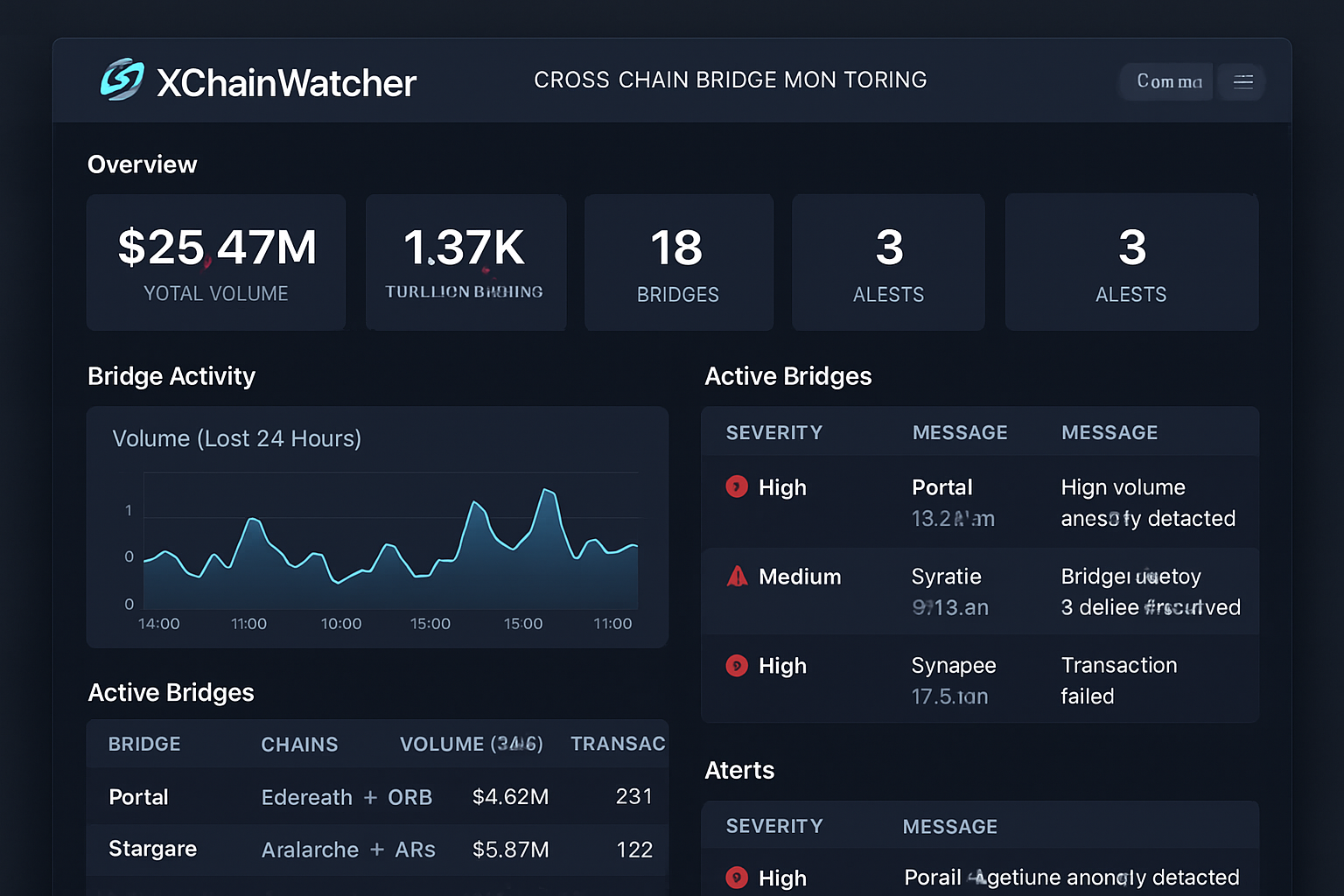
- Real-Time Attack Monitoring: Tools such as XChainWatcher provide continuous, real-time monitoring of cross-chain bridges, enabling immediate detection and alerting of suspicious activities or attacks as they happen.
- Comprehensive Vulnerability Coverage: Leading scanners are designed to identify a broad spectrum of risks, including semantic inconsistencies, failed transaction handling, and message verification weaknesses, as highlighted in audits by firms like Three Sigma.
- Integration with Professional Auditing Services: Top risk scanners are often used in conjunction with manual code reviews by established security firms, ensuring both automated and expert-driven vulnerability assessments for cross-chain protocols.

- Continuous Security Updates: The best scanners receive regular updates to address newly discovered threats, ensuring ongoing protection against evolving vulnerabilities in cross-chain messaging protocols.
The most effective risk scanners combine:
- Comprehensive code analysis: Detecting access control weaknesses and semantic inconsistencies in smart contracts.
- Real-time risk monitoring: Proactively identifying suspicious activity or attempted exploits on bridges.
- Integration with manual reviews: Augmenting automated scans with expert human analysis for nuanced vulnerabilities.
- Continuous assessment: Ensuring new threats are caught by regularly updating scan rules and threat models.
Selecting the Right Cross-Chain Audit Tools
No single tool covers every angle of protocol security analysis. The landscape is constantly evolving; leading solutions now offer tailored features for different ecosystems (e. g. , SolidityScan for EVM-based chains or SOLSTORM for Solana). When evaluating a scanner or audit service, consider its support for multi-network environments, depth of code review capabilities, integration with incident response workflows, and frequency of rule updates.
A robust approach combines automated scanning with professional auditing services, such as those provided by Three Sigma’s blockchain bridge audits. These services blend manual review with advanced tooling to deliver end-to-end coverage against both known and emerging threats.
For teams responsible for safeguarding cross-chain messaging protocols, the journey does not end with a single audit or scan. The threat landscape in blockchain interoperability is fluid. Attackers are quick to adapt, and new vulnerabilities emerge as protocols evolve. Therefore, continuous vigilance and proactive risk management are essential.
Continuous Security: Beyond the Initial Scan
Unlike static systems, cross-chain protocols must contend with frequent upgrades, shifting consensus mechanisms, and evolving dependencies on external oracles. This makes continuous security assessment a cornerstone of resilient protocol operations. Integrating automated risk scanners into your CI/CD pipeline ensures that every code update triggers a fresh analysis for vulnerabilities, catching issues before they reach production.
Dynamic monitoring tools like XChainWatcher provide real-time surveillance across multiple chains, instantly flagging suspicious behaviors such as unexpected asset movements or failed message relays. By combining these alerts with manual reviews from experienced auditors, teams can rapidly investigate and respond to potential incidents.
- Regular tool updates: Keep your risk scanners current to recognize newly discovered threats.
- Diversified testing: Pair automated scans with manual code reviews to catch subtle or logic-based flaws missed by machines.
- Incident response planning: Develop clear playbooks for responding to detected vulnerabilities or live exploits.
- Audit transparency: Share audit results and scanner findings with your community, transparency builds trust and invites helpful scrutiny.
- Ecosystem collaboration: Engage with other projects and security researchers; intelligence sharing accelerates threat detection across the industry.
The most resilient teams treat security as a living process rather than a one-off event. They prioritize ongoing education, encourage internal bug bounties, and foster a culture where reporting potential issues is celebrated, not penalized.
Emerging Trends in Real-Time Risk Monitoring
The drive toward real-time risk monitoring is reshaping how cross-chain messaging protocols are secured. Modern solutions are leveraging machine learning to identify anomalous transaction patterns that could indicate an exploit in progress. Meanwhile, some platforms offer APIs that let developers automate incident responses, such as pausing bridge operations or alerting stakeholders when critical risks are detected.
This evolution underscores why relying solely on periodic audits is insufficient in today’s environment. Instead, integrating real-time monitoring alongside regular codebase scans creates a layered defense that adapts as new threats emerge.
Frequently Asked Questions
If you’re new to protocol security analysis or looking to enhance your current stack of tools, consider exploring resources like the detailed guide from Blockchain App Factory on securing multi-chain contracts (Three Sigma’s bridge audits) or reviewing open-source scan reports for additional insights (SmartAxe on arxiv. org). Staying informed is just as important as staying vigilant.
The future of blockchain interoperability depends on robust risk management practices, and those who invest early in advanced scanning technologies will be best positioned to build trust in this rapidly expanding ecosystem.



No comments yet. Be the first to share your thoughts!