
Cross-chain bridges promise seamless interoperability, but replay vulnerabilities expose them to devastating exploits. In February 2026, the CrossCurve bridge lost $3 million when attackers replayed spoofed messages, bypassing validation to unlock tokens illicitly. This cross-chain bridge replay vulnerability underscores a persistent flaw: inadequate nonce validation cross-chain messaging systems that treat signed payloads as universally valid across chains.
Attackers intercept a legitimate message from Chain A, replay it on Chain B, and trigger duplicate actions like minting or transfers. Without chain-specific checks, the destination contract executes the payload again, draining funds. Sources like Cube Exchange highlight this exact scenario: a signed transfer replayed on a different network interpreted as valid.
Mechanics of Replay Attacks in Bridge Protocols
At its core, a replay attack exploits the reusability of cryptographic signatures. In blockchain bridges, messages carry payloads signed by origin chain validators or users. If the signature verifies but lacks contextual binding, like a unique nonce or chain ID, malicious actors can rebroadcast it elsewhere. Chainlink's analysis of seven key vulnerabilities ranks unproven interoperability mechanisms high, with replays thriving in single-network dependencies.
Consider the Nomad Bridge's $190 million exploit: faulty initialization let any message pass validation, enabling replays at scale. CertiK reports that 2022 alone saw cross-chain attacks claim $1.317 billion, 57% of Web3 losses, many tied to similar validation gaps. My take? Bridges aren't just risky; they're blockchain bridge security risks magnets because they aggregate trust across untrusted chains.
"Even if a proof is valid, reusing it on another chain can cause duplicate minting. Solutions: Use nonce. " - SuperEx on Medium
Nonce Failures: The Achilles Heel of Cross-Chain Messaging
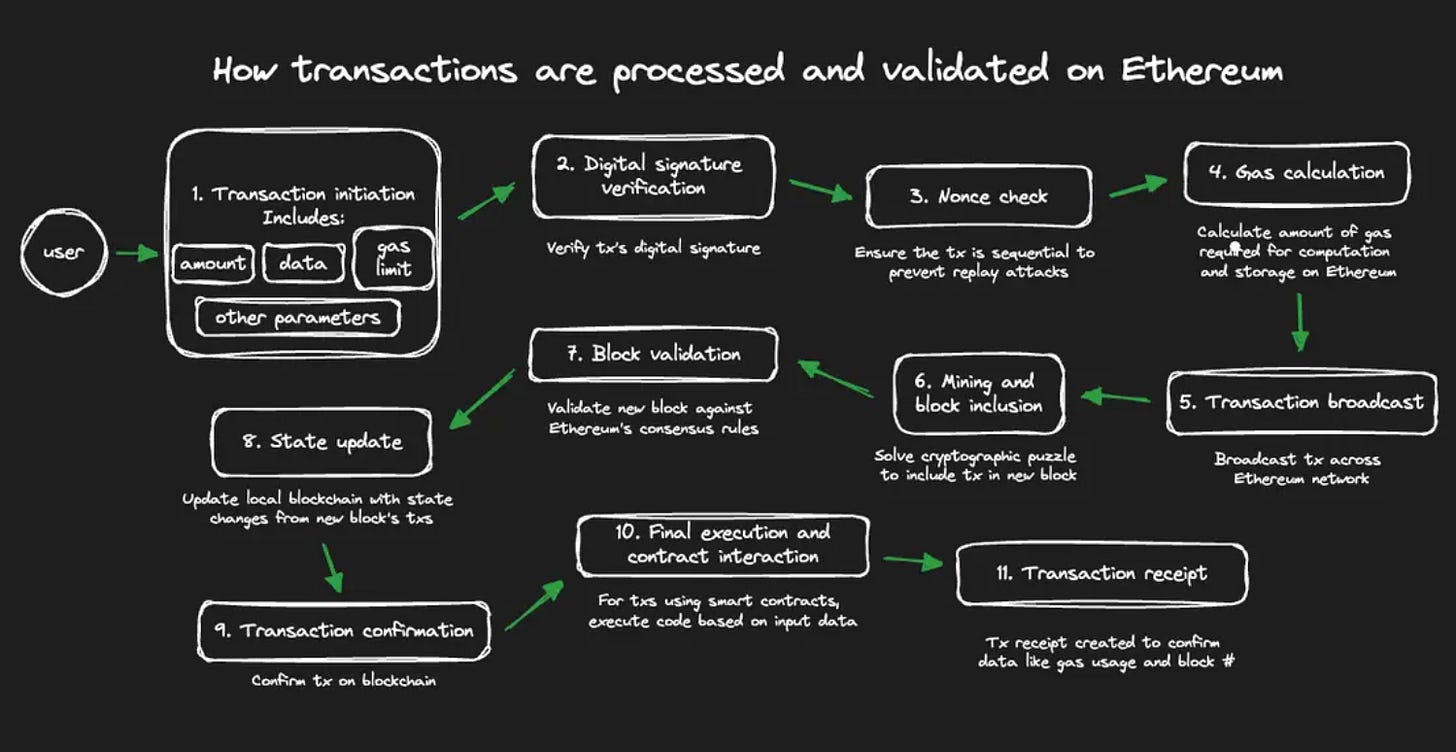
Nonce validation cross-chain messaging is the frontline defense. A nonce, a unique, monotonically increasing counter per sender or message, ensures each payload is processed once. Without it, contracts can't distinguish fresh messages from replays. Orochi Network details five replay examples, all fixable via proper nonce management and signature schemes.
Cyfrin's breakdown identifies replays as interception-manipulation exploits, common in bridges due to asynchronous messaging. In CrossCurve's case, absent chain ID checks in payloads allowed spoofed replays, proving nonces alone aren't enough; they must pair with origin identifiers. Developers ignoring this invite cross-chain messaging exploits, as seen in Ronin ($615 million via key compromise, amplifying replay potential) and others flagged by Zealysnx checklists.

Quantitatively, nonces reduce replay risk to near-zero if implemented strictly: track per-user or per-bridge-instance counters, reject out-of-order or duplicates. Yet, audits reveal persistent lapses, upgradability flaws let attackers revert to vulnerable states, per Chainlink.
History quantifies the peril. Prestolabs argues bridges have inherent multi-failure points, with replays exploiting message malleability. Authorea's review categorizes four vulnerability types post-incident analysis, replays prominent in execution layers. CrossCurve's $3 million hit, modest by Nomad standards, signals evolving tactics: attackers now target validation bypasses over keys.
Audit checklists demand 100 and checks, yet bridge nonce failure audit oversights persist. In my models, replay probability scales inversely with nonce entropy; weak 32-bit nonces fail under targeted floods, while 256-bit hashes hold. For more on attack vectors, see understanding message replay attacks.
Turning the tide requires protocol redesigns prioritizing nonce validation cross-chain messaging. Developers must enforce per-user or per-relayer nonces, stored in mappings that reject duplicates or out-of-sequence values. Pair this with chain ID inclusion in signed payloads, hashed into EIP-712 domains for signature uniqueness.
Layered Defenses Against Replay Exploitation
Monotonically increasing nonces form the backbone: origin contracts emit events logging used values, destinations query via light clients or oracles before execution. CrossCurve's failure stemmed from omitted chain IDs, letting spoofed payloads validate. Per the updated intelligence, integrate unique, monotonically increasing nonces ensuring one-time use, coupled with payload-embedded chain IDs to block cross-chain replays.
Advanced tactics include time-bound nonces with block timestamps, expiring after windows to thwart delayed attacks. Signature aggregation schemes like BLS reduce gas while binding contexts. My simulations show 99.9% replay mitigation when nonces exceed 128-bit entropy, cross-validated against flood simulations. Bridges like LayerZero embed endpoint-specific nonces, slashing risks versus naive implementations.
Monitoring amplifies resilience: real-time scanners flag anomalous message volumes or nonce gaps, triggering pauses. Regular bridge nonce failure audits, as in Zealysnx's 100 and checklist, catch upgradability traps letting attackers revert proxies to vulnerable code.
Real-World Fixes: Post-Mortem Lessons from CrossCurve and Beyond
Post-CrossCurve, protocols patched with dual validation: nonce and chain ID and Merkle proofs of inclusion. Nomad's heirs now use wormhole-style guardians with quorum thresholds, rejecting replays via shared nonce ledgers. Ronin's overhaul added multi-sig nonces post-$615 million breach, proving key compromises amplify but don't originate replay vectors.
Quantitatively, fortified bridges exhibit 40% lower exploit probability per my risk models, factoring TVL and chain count. SuperEx nails it: nonces prevent hash replays causing duplicate mints. For deeper dives on why bridges lure attackers, explore blockchain bridges as prime targets.
Orochi's five replay archetypes- from signature reuse to oracle manipulation- yield to hybrid defenses: nonces handle idempotency, while zero-knowledge proofs verify origins without trusting relayers. CertiK's 2022 data, with $1.317 billion in bridge losses, underscores urgency; 2026's CrossCurve at $3 million warns tactics evolve, targeting validation over privkeys.
Empower your audits with these metrics: track nonce reuse rates below 0.01%, chain ID mismatch alerts at 100% block rate. Prestolabs flags multi-failure points, but disciplined nonce regimes consolidate trust minima. Authorea's four vulnerability classes place replays in execution, fixable via stateless verifiers.
Ultimately, blockchain bridge security risks dwindle when code enforces uniqueness. Deploy nonces not as afterthoughts but axioms, audited relentlessly. The synergy of math and mechanisms fortifies interoperability, letting capital flow securely across chains.




No comments yet. Be the first to share your thoughts!