
In the sprawling ecosystem of blockchain interoperability, LayerZero V2 stands out as a pivotal protocol, promising seamless cross-chain messaging across over 60 blockchains. Yet, beneath its immutable and permissionless facade lie LayerZero V2 risks that demand rigorous scrutiny, particularly around its endpoints. These components form the backbone of communication, and any flaw could cascade into catastrophic cross-chain messaging vulnerabilities. As protocols like LayerZero power billions in assets, understanding these risks through LayerZero endpoint security lenses becomes essential for developers and investors alike.
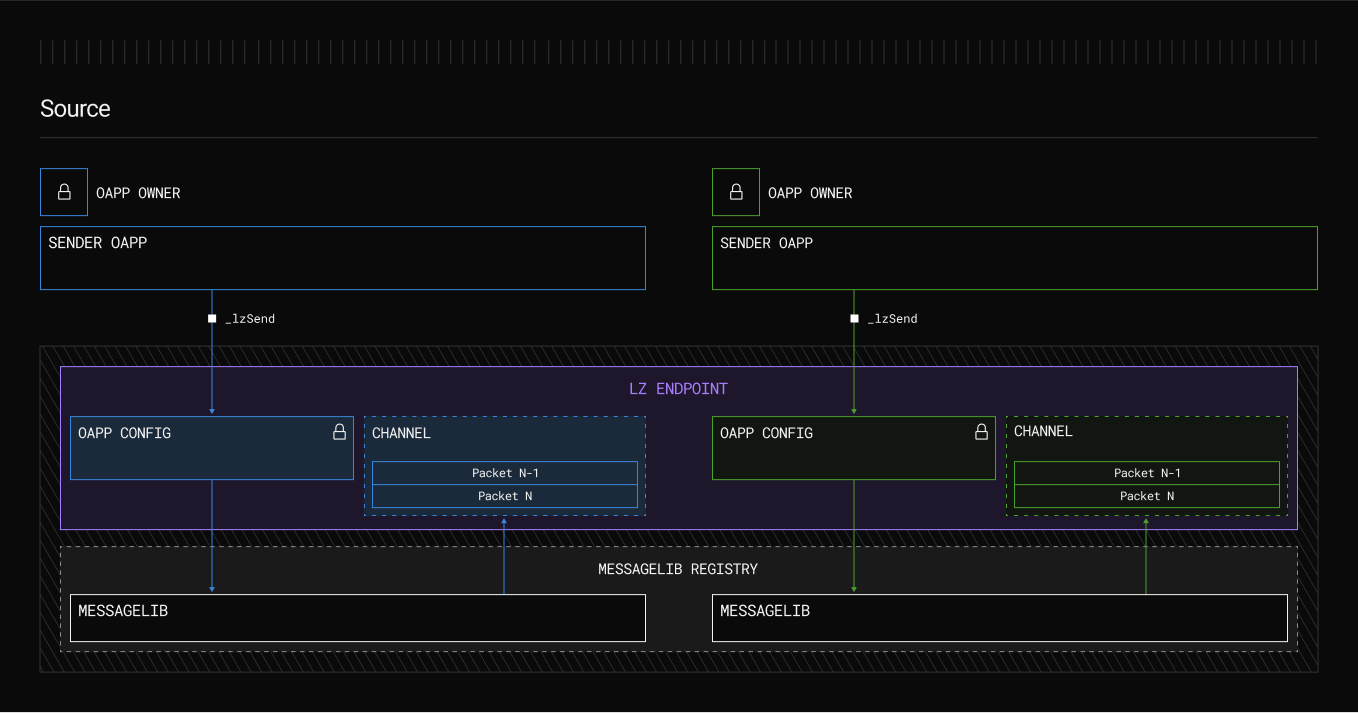
LayerZero V2, launched in late 2023, refines its predecessor with a modular security stack. Endpoints serve as the primary interface for sending and receiving messages, while Message Libraries (MessageLibs) handle the encoding and decoding logic. According to deep dives from sources like Mark Murdock's Medium analysis, these contracts are the linchpin; a single bug here disrupts omnichain flows. The whitepaper touts an intrinsically secure design, leveraging immutable endpoints to prevent unauthorized alterations. But immutability cuts both ways: once deployed, flaws are permanent unless mitigated through layered verifiers.
Endpoints as the Vulnerability Nexus
At the heart of LayerZero endpoint security concerns are the Endpoint contracts themselves. Deployed on each supported chain, they coordinate with Decentralized Verifier Networks (DVNs) for message validation and Executors for on-chain execution. This decoupling aims to isolate failures, yet GitHub repositories and metalamp. io overviews reveal that mismatched send and receive libraries can fracture channels entirely. Imagine a message dispatched from Ethereum but mangled upon arrival on Arbitrum; such discrepancies, often stemming from misconfigurations, expose user applications to silent failures.
LayerZero's flexibility empowers user applications (UAs) to tweak Oracle and Relayer setups, a feature Cantina. xyz highlights as both innovative and perilous. Misuse could enable fee-less messaging, draining protocol resources or enabling spam attacks. With over 55,000 contracts live by mid-2024, the attack surface balloons. Blockchain bridge scanners like ours flag these as high-priority: endpoints must enforce strict library versioning, yet audits uncover persistent gaps.
Decentralized Verifier Networks: Strengths and Subtle Weaknesses
DVNs represent LayerZero V2's boldest evolution, replacing centralized oracles with permissionless verifier sets. Each DVN independently attests to message integrity, requiring a configurable threshold for consensus. LlamaRisk's OFT analysis, covering $44 billion in cross-chain assets, underscores the stakes: a compromised DVN could falsify deliveries, siphoning funds across chains. LayerZero counters with a $15 million bug bounty, incentivizing whitehats to probe these networks.
However, placeholder DVNs - default setups for testing - pose immediate threats if left in production. The protocol's documentation warns of degraded security, yet deployment stats suggest oversight persists. Executors, tasked with atomic execution, inherit these risks; a verified but malicious payload executes unchecked if DVN thresholds falter. This modular approach, praised in YouTube engineering talks, invites composability but amplifies cross-chain messaging vulnerabilities when stacks misalign.
Misconfigurations: The Silent Killer in Production
Beyond architecture, operational pitfalls amplify LayerZero V2 risks. User applications modifying security configs post-deployment can inadvertently weaken stacks. Medium posts by Chaisomsri note that heavier cross-chain reliance correlates with elevated vulnerabilities; LayerZero's 300 and dApps exemplify this. Mismatched MessageLibs, for instance, break payload parsing, leading to reverted transactions or worse, partial executions that lock funds.
LayerZero's message channel security model addresses validator set limitations by distributing trust, yet total value transferred dwarfs individual safeguards. Protocol interfaces, simplified in V2 per Populus insights, ease integration but lower barriers for hasty deployments. LayerZero audit insights from multiple rounds reveal recurring themes: uninitialized DVNs, overlooked fee mechanisms, and executor frontrunning exposures. Developers must prioritize simulation tools and scanners to catch these pre-launch.
Real-world incidents underscore these LayerZero audit insights. While no catastrophic exploits have toppled the protocol yet, near-misses from misconfigured endpoints highlight the fragility. Consider a scenario where a UA swaps a production DVN for a test one; messages pass verification but lack economic finality, inviting replay attacks. Our blockchain bridge scanners at Cross-Chain Messaging Risk Scanners detect such anomalies by cross-referencing deployment parameters against best practices, scoring endpoints on a vulnerability heatmap.
Mitigating Endpoint Exposures: A Layered Defense
LayerZero V2's programmable security stack offers tools to fortify endpoints, but execution matters. Developers should enforce immutable MessageLib pairings via governance proxies, ensuring send-receive symmetry. DVN configurations demand multi-signature thresholds exceeding 66%, diversified across independent networks like Hyperlane verifiers or native chain light clients. Executors benefit from timelocks on high-value payloads, curbing frontrunning in volatile DeFi contexts.
The $15 million bug bounty program, active since launch, has surfaced edge cases in fee abstraction and payload compression. Audits by top firms reveal progress: V2 endpoints now resist reentrancy better than V1, with gas-optimized paths reducing denial-of-service vectors. Yet, as integration swells past 300 dApps, collective diligence falters. Protocols like Stargate and Radiant Capital, built atop LayerZero, amplify risks; a single endpoint flaw propagates omnichain.
Cross-Chain Messaging Risk Scanners steps in here, providing real-time endpoint forensics. Our platform simulates cross-chain payloads, flagging library drifts and DVN under-collateralization. For instance, scanning a live deployment might reveal a 20% consensus gap in verifiers, prompting reconfiguration before capital flight. This methodical approach aligns with my philosophy: fundamentals like verifiable trust never fade in the interoperability rush.
Future-Proofing Against Evolving Threats
Looking ahead, LayerZero V2 must grapple with quantum-resistant signatures and zero-knowledge proofs for private messaging. Current endpoints, while robust, assume honest-majority verifiers; adversarial chains could collude, forging attestations. Enhanced monitoring via on-chain oracles for DVN health metrics would preempt this. Meanwhile, cross-chain messaging vulnerabilities evolve with composability; horizontal stacking invites novel attacks like nested executor griefing.
Investors and builders, take note: LayerZero's 60-plus chain footprint demands proactive scanning. Our tools dissect OFT standards managing $44 billion, revealing smart contract hotspots in adapter patterns. By prioritizing LayerZero endpoint security, projects sidestep the pitfalls that felled bridges like Wormhole or Ronin. The protocol's censorship resistance shines, but only if endpoints remain unbreached fortresses.
Ultimately, LayerZero V2 endpoints embody the double-edged sword of modularity: empowering yet exposing. Rigorous audits, simulation-driven deployments, and continuous scanning form the triad for resilience. As cross-chain TVL climbs, those ignoring these LayerZero V2 risks court avoidable peril. Stay vigilant; in blockchain's interconnected web, one weak link unravels the chain.



No comments yet. Be the first to share your thoughts!