
Imagine locking up your assets in a DeFi lending protocol, confident that cross-chain magic will let you earn yields across blockchains. Then, bam, a misdelivered message throws everything into chaos, and suddenly your collateral vanishes. Cross-chain message misdelivery isn't just a tech glitch; it's a ticking bomb for lending protocols, amplified by state inconsistencies cross-chain that hackers love to exploit. As someone who's traded through DeFi's wild rides, I've seen how these vulnerabilities turn seamless interoperability into a nightmare.
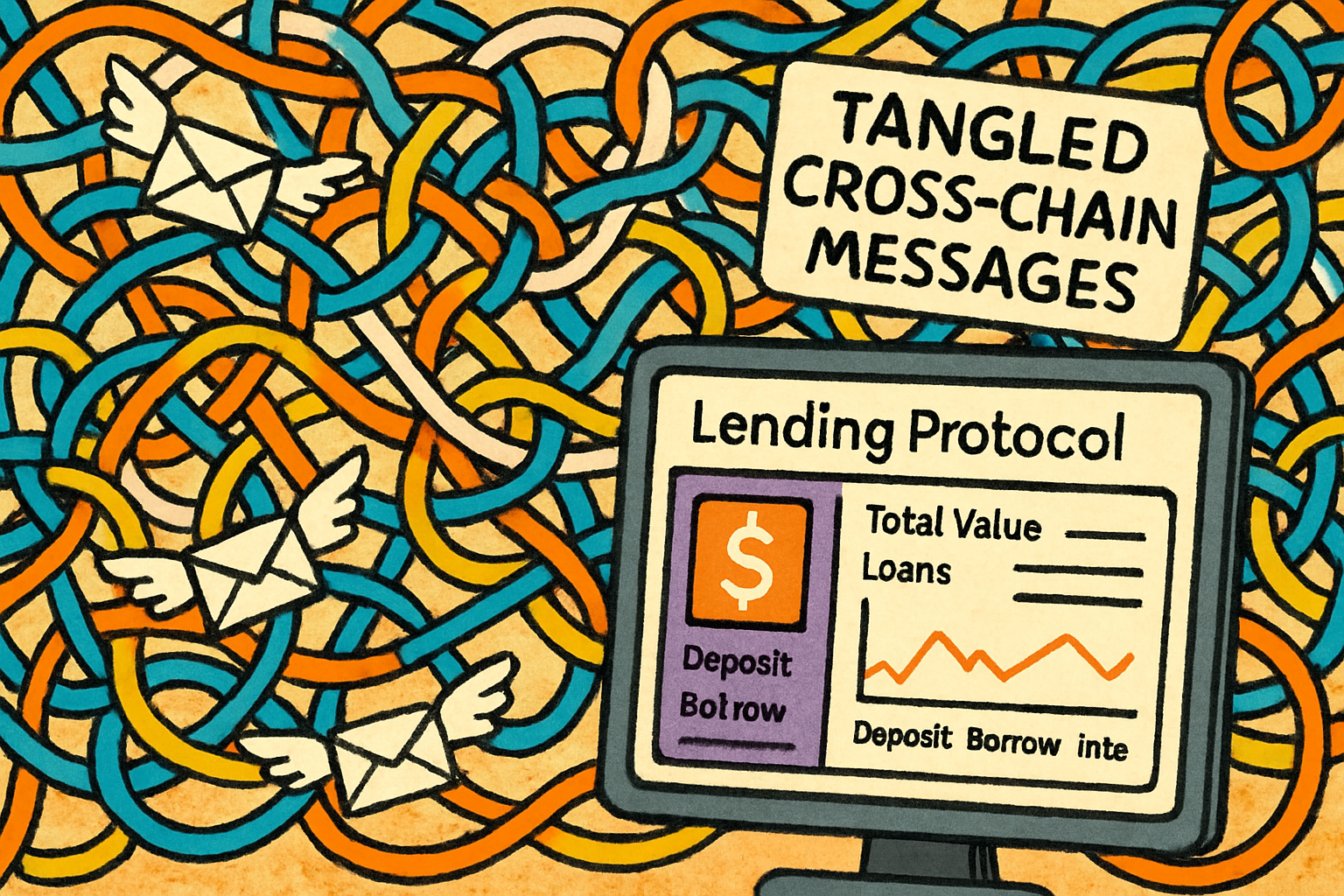
Unpacking Cross-Chain Message Misdelivery Risks
At the heart of cross-chain ops, messages carry the instructions for asset transfers and state updates between chains. But when these messages go astray, delayed, reordered, or straight-up blocked, lending protocols pay the price. Picture this: an attacker delays your borrow confirmation on Chain A while frontrunning a liquidation on Chain B. That's cross-chain lending exploits in action, siphoning value through simple timing tricks.
Denial-of-service hits even harder. Block a key message, and poof, liquidity freezes. Users can't repay loans or withdraw, trust erodes, and protocols bleed TVL. We've seen this playbook in action, with Chainlink highlighting how rushed messaging leads to theft and poor error handling invites disaster. Don't sleep on this; it's why blockchain bridge vulnerabilities top Chainalysis's hack charts, with $2 billion swiped across 13 bridges.
State Inconsistencies: The Hidden Fracture in Multi-Chain Lending
Lending thrives on synced states, who borrowed what, collateral ratios, interest accruals. Cross-chain? Chains clash with different block times and consensus rules. Ethereum's 12-second blocks versus Solana's sub-second frenzy creates mismatches. Protocols assuming uniform finality get burned: double-spends slip through, slippage skyrockets, and lenders foot the bill.
Oracles pile on the pain. Lending needs spot-on prices for cross-chain collateral. Tweak an oracle feed, and attackers mint overcollateralized debt or arbitrage into oblivion. Add smart contract slip-ups, like sloppy state mapping or infinite loops, and you've got a recipe for unauthorized mints. Quantstamp and Presto Labs nail it: bridges are failure magnets, and lending protocols amplify every flaw.
Real-World Exploits Lighting Up Lending Vulnerabilities
History doesn't lie. Wormhole's 2022 fiasco saw forged signatures mint 120,000 wETH on Solana, no collateral needed provides $320 million gone, rippling into lending pools reliant on bridged assets. Nomad followed, a config blunder letting thieves drain $190 million. Fast-forward: that $11 million exploit last month screams the same tune. These aren't isolated; they're symptoms of DeFi protocol risks when messages misfire and states desync.
As a trader spotting momentum shifts, I urge you: scan your bridges religiously. Platforms like ours at Cross-Chain Messaging Risk Scanners flag these before they bite. Check out our deep dive on detecting these risks early. Ride the cross-chain trend, but respect the risks, or get rekt.
Let's flip the script: you don't have to be a victim. Spotting these fractures early changes the game. That's where tools like Cross-Chain Messaging Risk Scanners shine, dissecting message flows and state syncs before exploits strike. But knowledge alone won't cut it; action does.
Arming Lending Protocols Against Misdelivery Mayhem
Robust message validation tops my list. Demand signatures, nonces, and replay protection on every cross-chain ping. Skip this, and you're begging for reordering chaos. Align consensus realities too, baking in chain-specific finality checks. Solana's speed versus Ethereum's caution? Model it explicitly, or watch double-spends dance through your collateral.
Oracles need bulletproofing. Ditch single points of failure for decentralized feeds like Chainlink CCIP, tamper-proof and battle-tested. And smart contracts? Audit them obsessively, hunting unbounded ops and state mismatches. Prestolabs warns of bridges' failure parade; lending amps it up, so double down on formal verification.
Think bigger: simulate attacks in testnets. Flood messages, reorder them, spike latencies. Tools from ARMswap and Startup Defense blueprint this, turning 'what if' into 'handled. ' I've swung trades through bridge scares; protocols that stress-test thrive while others crumble.
Future-Proofing DeFi: Scan Now, Secure Forever
Cross-chain lending's potential dwarfs the pitfalls, but only if we respect the risks. Chainalysis's $2 billion hack tally isn't destiny; it's a wake-up. Integrate real-time scanners into your stack, monitor state drifts, flag misdeliveries. Our platform does just that, empowering devs and traders to ride interoperability waves safely.
You're in DeFi for the edge, the yields, the momentum. Don't let state inconsistencies cross-chain clip your wings. Deploy these defenses, scan relentlessly, and turn vulnerabilities into your moat. The next exploit? Let it be someone else's lesson. Grab our insights at Cross-Chain Messaging Risk Scanners, and let's build unbreakable bridges together.




No comments yet. Be the first to share your thoughts!