


Bitcoin has always been regarded as the gold standard for security and decentralization in the blockchain world. Yet, for years, its utility was largely siloed within its own ecosystem. In 2025, this paradigm is shifting rapidly as trust-minimized Bitcoin bridges move from theory to practice, fundamentally reshaping cross-chain security and interoperability.

Why Cross-Chain Security Needs a Rethink
The explosive growth of DeFi and multi-chain applications has exposed the Achilles’ heel of cross-chain activity: custodial bridge risks. Centralized bridges have historically served as single points of failure, attracting exploits that have resulted in billions lost to hacks. As Bitcoin’s price hovers near $95,957.00, its growing adoption across DeFi platforms makes secure interoperability more urgent than ever.
Traditional cross-chain bridges often rely on federations or multi-signature setups, requiring users to trust a select group of validators or custodians. This model introduces new vectors for attack and undermines the core principle of decentralization that Bitcoin champions. The market’s appetite for a more robust solution is clear, and 2025 is delivering it.
The Rise of Trust-Minimized Bitcoin Bridges
The term “trust-minimized” refers to systems that reduce or eliminate reliance on trusted intermediaries through cryptographic proofs and decentralized mechanisms. In the context of Bitcoin bridging, this means moving away from custodians entirely and leveraging innovations like BitVM, zero-knowledge proofs, and fraud proofs to facilitate native L1 interoperability.
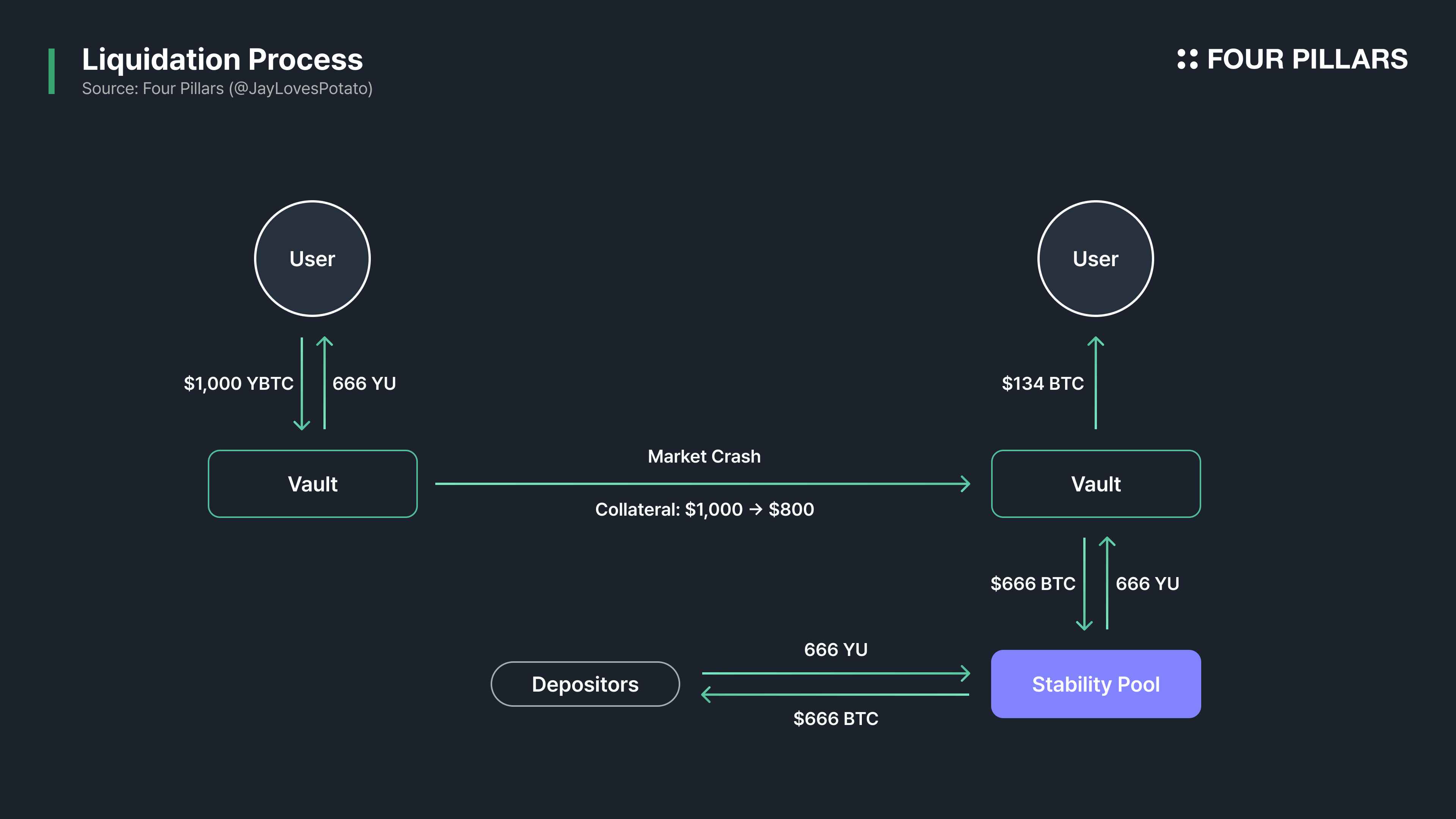
Bitlayer’s BitVM Bridge, launched in July 2025, exemplifies this shift. By enabling users to deposit BTC directly and receive YBTC, a token pegged 1: 1 with BTC, on compatible DeFi platforms, Bitlayer removes centralized risk from the equation. The bridge utilizes advanced cryptography to ensure that only valid transactions are processed, dramatically lowering the attack surface compared to legacy solutions.
This is not an isolated development. Babylon Labs’ partnership with Fiamma brings trust-minimized bridging to Cosmos chains using BitVM2 and zero-knowledge technology. Meanwhile, Cardano’s Cardinal Protocol and Syscoin’s trustless bridge are breaking new ground by allowing BTC holders to interact with DeFi without ceding control of their assets to third parties.
Key Technical Innovations Driving the Revolution
The technical backbone of these new bridges rests on a trio of cryptographic advances:
- BitVM and BitVM2: These frameworks allow complex computations (like verifying bridge transactions) to be executed off-chain but enforced by Bitcoin’s consensus rules via fraud proofs or challenge-response games.
- Zero-Knowledge Proofs: ZK-proofs enable secure verification that a transaction meets all required conditions without revealing sensitive data or relying on external validators.
- Decentralized Watchtowers and Signer Networks: Instead of relying on a handful of trusted parties, these mechanisms distribute responsibility across many independent actors who monitor for fraud or facilitate multi-party computation securely.
This architecture not only mitigates custodial risk but also unlocks new use cases, like lending BTC as collateral or earning yield in DeFi protocols, without ever relinquishing asset sovereignty.
Bitcoin Price Prediction 2026-2031 After Trust-Minimized Bridge Adoption
Forecasts incorporate the impact of trust-minimized cross-chain bridges, ongoing DeFi integration, and evolving market conditions.
| Year | Minimum Price | Average Price | Maximum Price | % Change (Avg YoY) | Scenario Insights |
|---|---|---|---|---|---|
| 2026 | $72,000 | $104,000 | $128,000 | +9% | Market consolidates after rapid 2025 growth; DeFi integration matures, some regulatory headwinds. |
| 2027 | $85,000 | $120,000 | $155,000 | +15% | Bullish momentum as Bitcoin DeFi usage expands; institutional adoption rises; increased competition from alt-L1s. |
| 2028 | $98,000 | $137,000 | $180,000 | +14% | Macro tailwinds, higher DeFi TVL, regulatory clarity improves; potential for a new all-time high. |
| 2029 | $112,000 | $158,000 | $210,000 | +15% | Wider cross-chain adoption; Layer 2 scaling and trustless bridges drive network effects; risk of market corrections. |
| 2030 | $128,000 | $181,000 | $245,000 | +15% | Bitcoin achieves mainstream programmable asset status; new DeFi/TradFi integrations; global regulatory progress. |
| 2031 | $145,000 | $210,000 | $280,000 | +16% | Full DeFi integration, robust cross-chain infrastructure, and continued institutional inflows; market matures. |
Price Prediction Summary
Bitcoin’s price is expected to experience steady growth from 2026 to 2031, supported by the widespread adoption of trust-minimized bridges and increased participation in cross-chain and DeFi ecosystems. While short-term volatility and regulatory uncertainty remain, the long-term outlook is bullish, with Bitcoin becoming an increasingly integral part of decentralized finance and programmable money.
Key Factors Affecting Bitcoin Price
- Adoption of trust-minimized Bitcoin bridges enabling secure DeFi use cases
- Expansion of cross-chain interoperability and TVL growth in Bitcoin DeFi
- Macro market cycles and Bitcoin halving events
- Institutional adoption and TradFi integration
- Regulatory developments and global policy clarity
- Competition from other programmable blockchains and L1/L2 ecosystems
- Advancements in zero-knowledge proofs and smart contract technology
Disclaimer: Cryptocurrency price predictions are speculative and based on current market analysis.
Actual prices may vary significantly due to market volatility, regulatory changes, and other factors.
Always do your own research before making investment decisions.
The Market Impact: Real-Time Data and Forward-Looking Analysis
The launch cadence throughout 2025 has been relentless: Starknet’s collaboration with Alpen Labs in October introduced programmable BTC assets secured by decentralized signers; Syscoin’s May release leverages proof-of-work anchoring; Rootstock is preparing Union Bridge for mainnet in Q4 using fraud proofs and watchtower networks. These initiatives are not only technical milestones, they are reshaping user expectations around what secure cross-chain activity should look like.
If you’re interested in how these advances compare with previous bridge models or want a deeper dive into how trustless verification stacks up against multisig approaches, consider exploring our analysis at Cross-Chain Bridge Security Risks in 2025: How Trustless Verification and Multisig Are Changing the Game.
As these trust-minimized bridges mature, the implications for users and protocols extend far beyond technical novelty. With Bitcoin’s price currently at $95,957.00, the stakes are high: every new bridge implementation must withstand not only technical scrutiny but also the relentless attention of adversaries seeking to exploit any weakness. The shift away from custodial risk is not merely a security upgrade; it is a restoration of core crypto values, sovereignty, transparency, and censorship resistance, at a scale never before possible for Bitcoin holders.
Unlocking New Horizons for Bitcoin in DeFi
The impact of trust-minimized bridges is already visible in the rapid expansion of Bitcoin DeFi use cases. Where once BTC was largely relegated to “hodling” or simple on-chain transfers, holders now have direct access to lending markets, yield generation protocols, and even complex derivatives, without ever surrendering control to centralized intermediaries. For example, YBTC on Bitlayer or BTC bridged via Syscoin can be used as pristine collateral across multiple ecosystems.
This newfound utility is catalyzing capital efficiency across chains. Protocols that integrate native L1 interoperability see increased liquidity inflows and reduced friction for onboarding BTC users into their platforms. As cross-chain messaging becomes more robust through innovations like BitVM2 and ZK-proofs, composability between blockchains improves, enabling atomic swaps and seamless asset movement without introducing new trust assumptions.
Security by Design: Reducing Systemic Risk in 2025
The most profound change lies in how systemic risk is managed. By removing trusted custodians from the critical path and distributing validation across decentralized networks or cryptographic proofs, these bridges dramatically reduce the attack surface that has plagued earlier solutions. The result is an ecosystem where exploits like those seen in previous years become increasingly difficult, if not economically infeasible, to execute.
For developers and security researchers, this means a paradigm shift in how risk analysis is approached. Instead of focusing primarily on social engineering or multisig compromise scenarios, attention turns toward verifying protocol logic, cryptographic soundness, and the robustness of challenge-response mechanisms. Tools such as real-time risk scanners are now essential for monitoring live bridge operations and flagging anomalous activity before it escalates into systemic events.
What Comes Next: The Road Ahead for Cross-Chain Security
The coming months promise further innovation as mainnet launches like Union Bridge for Rootstock bring even more sophisticated fraud proofs and decentralized watchtower systems online. As more protocols adopt trust-minimized architectures, and as security tooling matures alongside them, the cross-chain landscape will continue to evolve toward greater resilience.
Ultimately, trust-minimized Bitcoin bridges are setting a new benchmark for interoperability standards across all blockchains. By combining technical rigor with user-centric design principles, they empower both retail users and institutional players to leverage Bitcoin’s value wherever opportunity arises, all while preserving its foundational ethos.
If you’re looking to understand why some bridges succeed while others fail in this new era, or want an expert perspective on how cross-chain messaging risks are being addressed, our deep-dive at Why Most Cross-Chain Bridges Fail: Security Risks, Centralization, and the Path to Trustless Interoperability in 2025 offers valuable context.
About the Author